Sniffing...
China
Pekingese
Toy GroupAncient BreedLoyalAffectionateIndependentSmall12-14 years
The Pekingese, a breed steeped in antiquity and adorned with a majestic air, hails from the ancient lands of China. For centuries, this small yet dignified canine was the cherished companion of Chinese royalty, often regarded as sacred and exclusively owned by the Imperial family. Their very name is derived from Peking, the historical name of Beijing, the city that housed the revered Forbidden City.
Important Disclaimer:The information provided on this page about the Pekingese is intended for general knowledge and informational purposes only and does not constitute professional veterinary advice. Always consult with a qualified veterinarian for any health concerns or medical conditions related to your dog. The breed identification provided by our AI tool is a prediction and should not be considered a definitive diagnosis.
Pekingese Dog Breed Overview
- Breed Group
- Toy Group (Asian Breed)
- Origin
- China
- Purpose
- Cherished companion of Chinese royalty (original), Devoted companion and family pet (current)
- Size
- Small
- Other Names
- Peke, Lion dog, Sun dog, Sleeve dog, Pelchie dog, Peking Palace Dog, Imperial Dog of China
- Lifespan
- 12-14 years
- Temperament
- LoyalAffectionateIndependentStubborn (sometimes)DignifiedSelf-assuredCourageousFearlessAloof with strangers
- Activity Level
- Moderate
- Trainability
- Challenging (independent, stubborn)
- Grooming
- High (daily brushing)
- Shedding
- Moderate to High (year-round, seasonal peaks)
- Barking
- Alert Watchdog (Vocal when necessary, not excessive)
- Good with
- Health Issues
- Brachycephalic Syndrome (breathing issues)Eye Problems (corneal ulcers, dry eye, PRA)Patellar LuxationIntervertebral Disc Disease (IVDD)Heart Conditions (congestive heart failure, mitral valve disease)Skin Fold DermatitisObesityDental DiseaseBirthing Difficulties
- Suited For
- Owners committed to daily grooming
- Individuals prepared for potential health issues (especially brachycephalic care)
- Apartment dwellers or those with limited space
- Less active individuals or seniors
- Patient and consistent trainers
- Older Children (with gentle handling), Other Pets (with socialization)
Pekingese History & Origin: Popularity of Pekingese
The Pekingese, a breed steeped in antiquity and adorned with a majestic air, hails from the ancient lands of China. For centuries, this small yet dignified canine was the cherished companion of Chinese royalty, often regarded as sacred and exclusively owned by the Imperial family. Their very name is derived from Peking, the historical name of Beijing, the city that housed the revered Forbidden City.
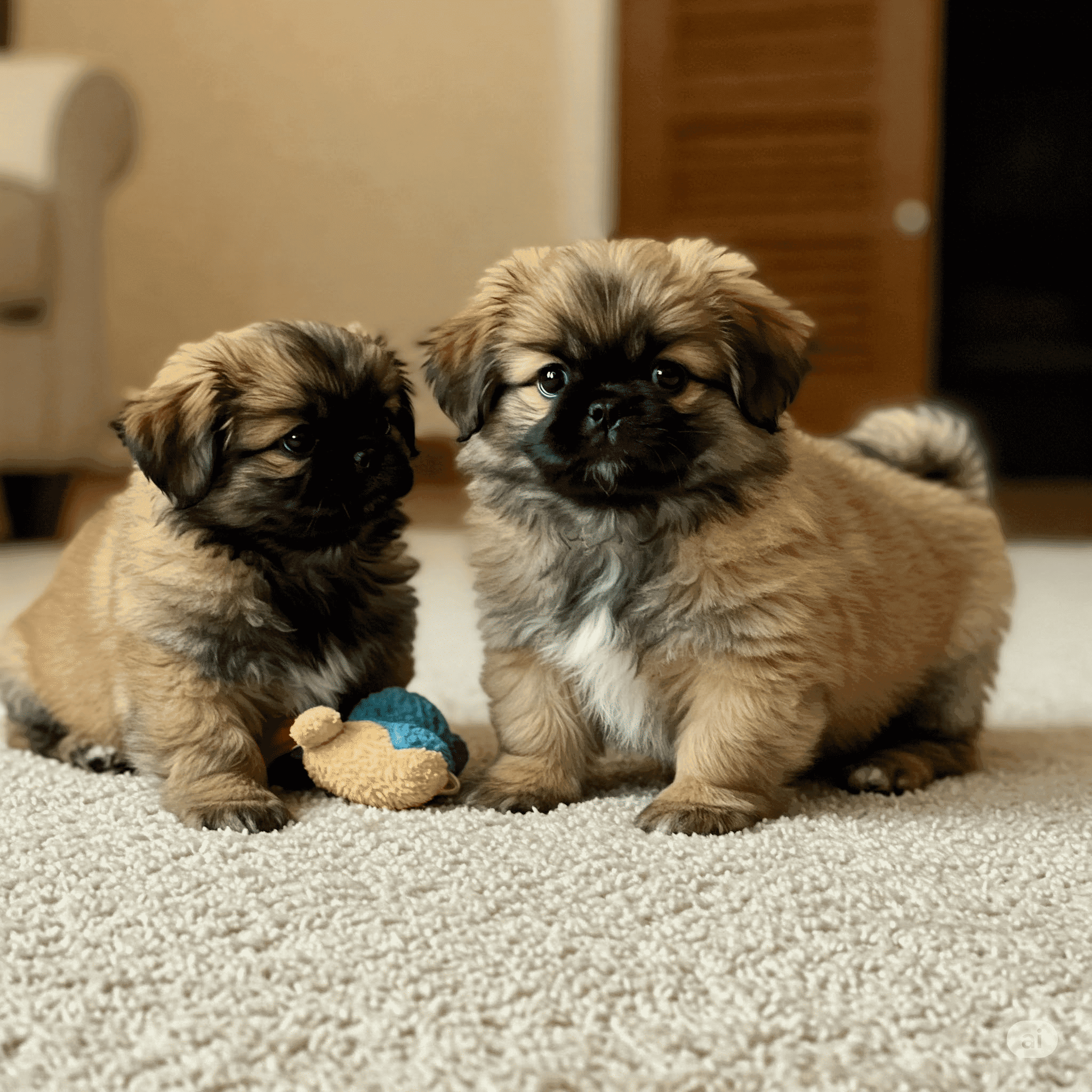
Pekingese's have cute babies 🐕
History of Pekingese
The Pekingese boasts an ancient lineage, with origins in China as far back as the 8th century Tang Dynasty, possibly earlier (Han Dynasty, 200 BC), making them one of the oldest companion breeds.
They were sacred palace dogs exclusively for the imperial family; commoners possessing one faced death. They enjoyed luxurious living and were believed to have mystical qualities, playing roles in religious ceremonies.
Legends link them to Buddha shrinking lions or a lion-marmoset love affair. They were bred to resemble 'Foo Dogs' (Chinese guardian lions).
Introduced to the West in 1860 after British forces looted the Imperial Palace. Queen Victoria received one named Looty. AKC registered them in 1906. A Pekingese survived the Titanic sinking in 1912.
Purpose and Popularity of Pekingese
Originally, Pekingese were cherished companions of Chinese royalty, often regarded as sacred. The smallest, fiercest ones were even used as miniature guard dogs hidden in sleeves.
Currently, they are primarily devoted companions. While historically popular, their numbers have declined, possibly due to care requirements. The AKC ranks them 93rd. They are used in designer breeds like Peke-A-Tese and Peekapoo and have won many Best in Show titles.
Did you know?
Historically, smaller Pekingese weighing under 6 pounds were referred to as 'sleeve dogs,' as Chinese royalty carried these tiny companions in the voluminous sleeves of their robes.
Pekingese Dog Breed Size and Physical Traits
Size of Pekingese dog Breeds
Size Category
Small
Height
Male
6-9 inches (15-23 cm)
Female
6-9 inches (15-23 cm)
Weight
Male
Up to 14 lbs (6 kg)
Female
Up to 14 lbs (6 kg)
Appearance of Pekingese dog Breeds
- Coat Type
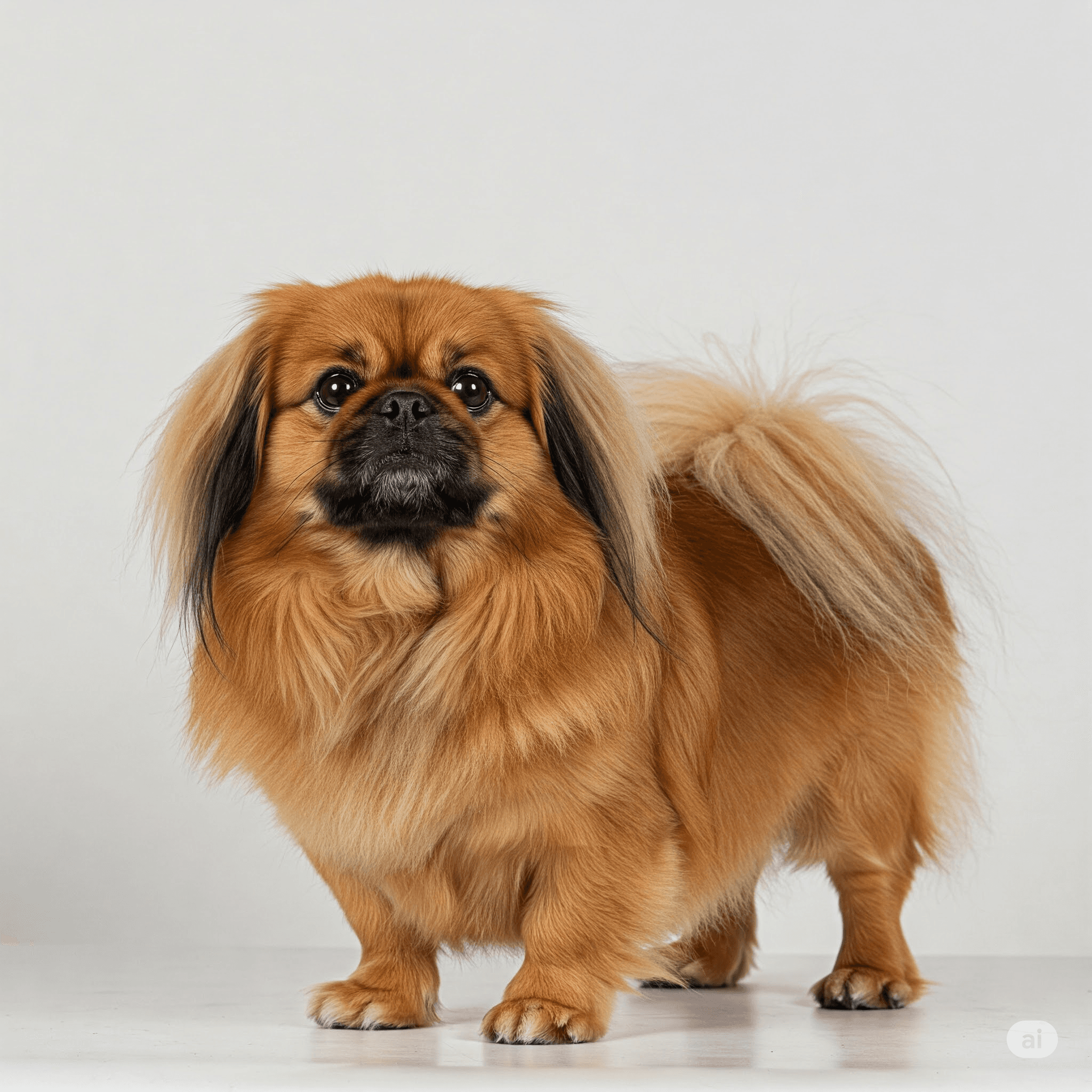
- Pekingese have luxurious double coat: dense, soft undercoat; long, coarse, straight outer coat. Forms 'lion's mane'. Feathering on ears, tail, legs.
- Eye Size & Color
- They have medium to large, dark, round or lemon-shaped eyes. Not bulging/almond-shaped. Black eye rims essential.
- Ear Size & Shape
- They have small to medium, heart-shaped, set high, hang close to head, profuse feathering ears.
- Tail
- They have set high, carried tightly, slight arch/curve over back to either side, long straight fringes tail.
Description of Pekingeses Appearance
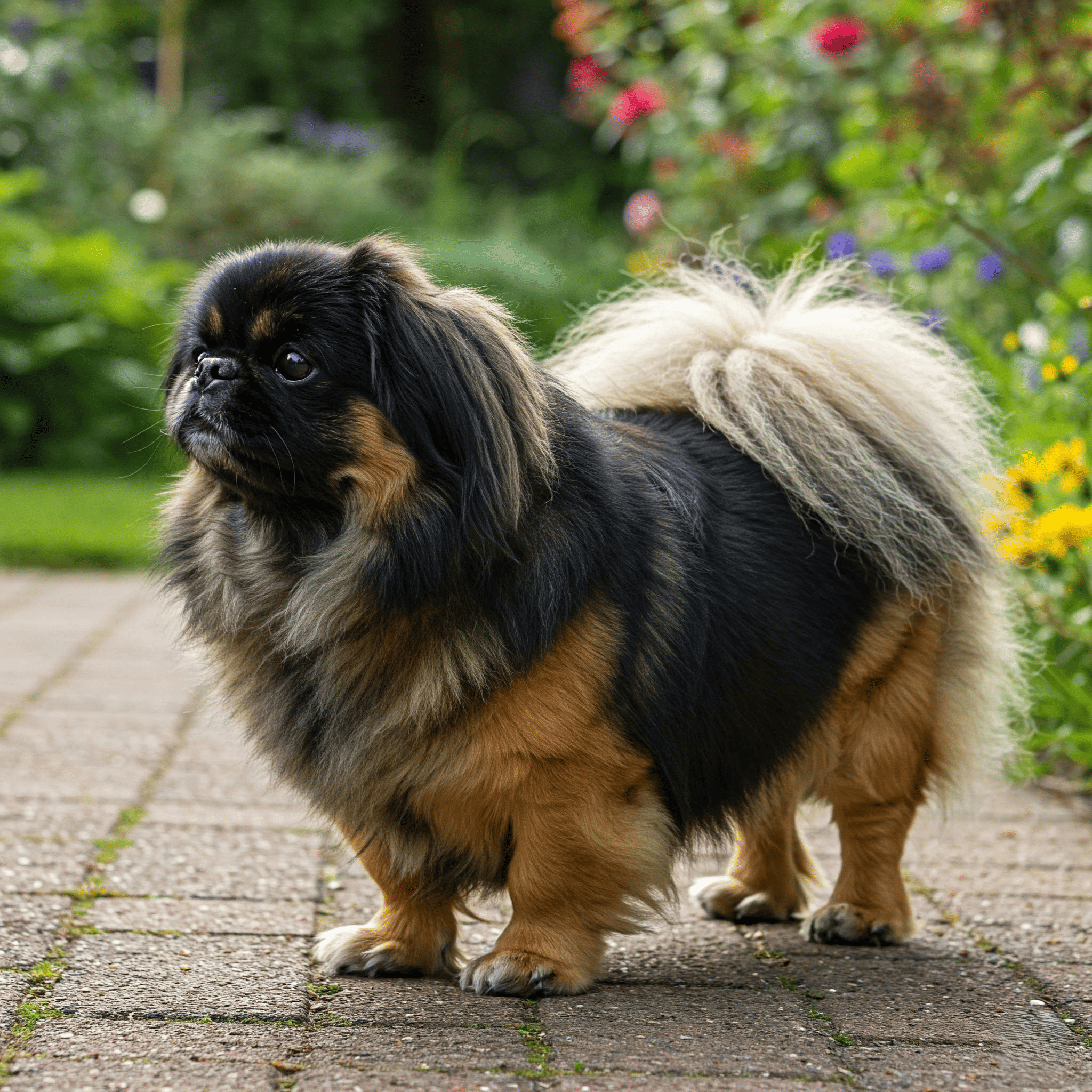
👀 How does Pekingese look like?
- The Pekingese is a small, stocky toy dog renowned for its lion-like appearance, featuring a luxurious double coat that forms a distinctive mane.
- Their head is large and broad with a short muzzle. Eyes are dark and prominent. Ears are heart-shaped and feathered.
- Males and females typically stand 6-9 inches tall and weigh up to 14 pounds, though 'sleeve dogs' can be under 6 pounds.
- A hallmark is their slow, dignified, rolling gait. The coat comes in a wide variety of colors and patterns, often with a black mask.
Coat Colors of Pekingese dogs
Biscuit
Black
Black and Tan
Cream
Fawn
Red
White
Sable
Brindle
Grey
Parti-color (Various)
Distinctive Features of Pekingese dog breeds
- Pekingese have lion-like mane around neck and shoulders
- They have luxurious, profuse double coat with feathering
- They have large, broad head, wider than deep; moderately broad, flat skull
- They have short, broad muzzle with perceptible length
- They have distinctive slow, dignified, rolling gait in front
- They have relatively short, thick, heavily boned forelegs (may be slightly bowed)
Pekingese Environment, Barking, Trainability and More...
Barking Level of Pekingese
Moderate
Pekingese are not typically excessive barkers but are alert and will readily vocalize to announce visitors or perceived threats. They can become vocal if left alone.
Trainability of Pekingese
Challenging
Training a Pekingese can be challenging due to their independent and sometimes stubborn nature. They respond best to positive reinforcement, patience, and consistency. Early training is highly recommended.
Energy Level of Pekingese
Moderate
Pekingese have moderate exercise needs, generally content with short daily walks and indoor playtime. They do not tolerate vigorous exercise well.
Friendly Environment Description of Pekingeses
- Pekingese are adaptable and well-suited for apartment living due to their small size and moderate exercise needs.
- They thrive on human companionship and should not be left alone for extended periods. They are sensitive to heat due to their brachycephalic nature.
- Early socialization is crucial for them to become well-adjusted and comfortable with various situations, people, and animals.

🏠 Pekingese dog breed in its home environment
Personality Traits of Pekingese dog breed
LoyalAffectionateIndependentStubbornDignifiedSelf-assuredCourageousFearlessAlertProtectiveReserved with strangers
Nature
The Pekingese embodies a captivating temperament, often described as a blend of regal independence and deep-seated loyalty. They are dignified, self-assured, courageous, and fearless, but their royal heritage has instilled an independent and sometimes stubborn streak.
Affectionate
Pekingese are highly affectionate towards their families, often forming strong bonds and attaching deeply to one particular person.
With Children
Pekingese generally do well with older children who understand how to handle them gently and respectfully. They may not be the best choice for households with very young children prone to rough handling.
With Other Dogs
With proper socialization from a young age, Pekingese can often get along well with other dogs and pets. Some may prefer other Pekingese but can be possessive of owners.
With Strangers
Pekingese can be aloof and reserved with strangers, often taking time to warm up to new people.
Protective
Pekingese are naturally alert with strong protective instincts, making them excellent watchdogs. They are quick to announce arrivals or perceived threats. Historically, small ones were sleeve guard dogs.
Adaptability
Pekingese are highly adaptable to various living environments, including apartments. Their thick coat helps in cold weather, but they are sensitive to heat.
Pekingeses are good with:
Older Children (gentle & respectful)Other Dogs & Pets (with early socialization)
Pekingese Dog Breed Care & Grooming Needs
Shedding Level of Pekingese
Moderate to High
Pekingese shed year-round, with more significant shedding during spring and autumn (seasonal shedding).
Grooming Needs of Pekingese
High
Their long, double coat requires diligent daily brushing to prevent mats and tangles, especially in the thick undercoat. Facial wrinkles need daily cleaning.
Grooming Tips
Daily brushing with a slicker brush or metal comb is essential. Pay special attention to the wrinkle over their nose, cleaning and drying it daily. Regular nail trimming and ear cleaning are necessary. Some owners trim fur above eyes for clear vision or clip the coat in hotter climates. Check long hair around the rectum for hygiene. Professional grooming is an option.
Drooling Frequency of Pekingese
Very Low
Pekingese almost never drool.
Pekingeses Daily Exercise Requirements
Minimum Daily Activity of Pekingese
Short daily walks
Pekingese have moderate exercise needs and are generally content with short daily walks and some indoor playtime. They do not tolerate vigorous exercise or hot weather well due to their brachycephalic nature.
Recommended Activities for Pekingeses
Short, leisurely walksGentle indoor playtimeInteractive toys and games for mental stimulation
Living Space Compatibility of Pekingeses
Yard Requirement
Not Required
Pekingese do not require a large yard and are typically content with indoor living. A small, secure outdoor space for fresh air and gentle romps can be beneficial.
Apartment Living: Ideal
Their small size and moderate exercise requirements make them well-suited for apartment living.
Living Considerations for Pekingeses
- Requires daily, diligent grooming.
- Highly sensitive to heat and humidity; needs protection in warm weather.
- Strong need for human companionship; should not be left alone outdoors.
- Early and consistent socialization is paramount.
- Training requires patience and positive reinforcement due to independent nature.
Pekingese Dog Lifespan and Health Issues
Average Lifespan of Pekingeses
12-14years
Common Health Issues of Pekingeses
Brachycephalic Obstructive Airway Syndrome (BOAS)
Breathing difficulties, heavy panting, snoring due to flat face (e.g., elongated soft palate, stenotic nares).
Corneal Ulcers/Abrasions
Injuries to the surface of the eye, common due to prominent eyes.
Dry Eye (Keratoconjunctivitis Sicca - KCS)
Insufficient tear production leading to eye irritation and damage.
Progressive Retinal Atrophy (PRA)
Degeneration of photoreceptor cells in the retina, leading to blindness.
Entropion/Exposure Keratopathy Syndrome
Inward turning of eyelids (entropion) or issues from eye exposure.
Patellar Luxation
Kneecap slips out of its normal position, common in small breeds.
Intervertebral Disc Disease (IVDD)
Degeneration or herniation of spinal discs, affecting the spinal cord.
Congestive Heart Failure / Mitral Valve Disease
Heart's inability to pump enough blood or defect in heart valve causing backflow.
Skin Fold Dermatitis
Inflammation and infection in skin wrinkles, particularly facial wrinkles.
Hydrocephalus
Buildup of cerebrospinal fluid in the brain, a serious condition.
Dental Disease
Inflammation, infection, and decay of teeth and gums, common in small breeds.
Obesity
Excessive body weight, which can exacerbate many other health issues.
Birthing Difficulties (Dystocia)
Problems during labor and delivery due to small pelvis relative to puppy head size.
Preventative Care of Pekingeses
- Regular veterinary check-ups for early detection and management.
- Routine dental cleanings and daily home dental care.
- Regular eye examinations by a veterinarian.
- Careful management in hot weather to prevent overheating.
- Maintain a healthy weight through proper diet and portion control.
- Clean and dry facial wrinkles daily.
What to feed Pekingese? Pekingese's diet and Nutrition
Recommended Diet for Pekingese dog breed
High-quality dog food specifically formulated for their age (puppy, adult, senior) and small size. A balanced diet should include adequate protein for muscle and coat health, moderate fat for energy, and fiber for digestion.
Typical Feeding Schedule of Pekingeses
| Age Group | Feeding Frequency |
|---|---|
| Puppies (under 6 months) | More frequent, smaller meals throughout the day (e.g., 3-4 meals). |
| Adults (over 6-12 months) | Generally thrive on two measured meals per day. |
| Seniors | May require dietary adjustments for reduced activity levels and slower metabolism; consult vet. |
Sensitivities & Considerations of Pekingeses
Potential Food Sensitivities of Pekingeses
No specific food sensitivities are widely reported for the breed, but individual dogs can develop allergies or intolerances. Monitor for any adverse reactions.
Dietary Considerations of Pekingeses
- Prone to obesity; careful attention to portion control is essential.
- Measure food with a cup to prevent overfeeding.
- Limit treats to no more than 10% of their daily caloric intake.
- Monitor weight and adjust food intake to maintain a healthy body condition.
- Hand-feeding puppies or adding treats to their bowl while eating can help prevent food-guarding.
Weight Management of Pekingeses
Crucial due to their predisposition to obesity, which can exacerbate other health problems. Monitor weight regularly.
Signs of Healthy Weight of Pekingeses
- A visible waistline when viewed from above.
- Ability to easily feel their ribs without a thick layer of fat covering them.
- An abdomen that is tucked up when viewed from the side.
Tips for Healthy Feeding of Pekingeses
- Maintain a regular feeding time each day.
- Measure food accurately for each meal.
- Limit treats and avoid giving table scraps.
- Ensure fresh, clean water is always available.
- Consult with a veterinarian for personalized dietary advice or if you have concerns about weight.
Is Pekingese a good match for you?
The Pekingese can be a wonderful companion for individuals or families who appreciate their unique charm and are prepared for their specific needs. They thrive with owners who can provide consistent grooming, understand their independent nature, and offer a loving indoor home.
Pekingeses are a Great Match For
- Individuals or families who can commit to daily grooming.
- Owners prepared for potential health issues, especially brachycephalic care.
- Those with a more relaxed lifestyle, as exercise needs are moderate.
- Seniors or those living in apartments, due to small size and adaptability.
- Patient and consistent trainers who use positive reinforcement.
- People seeking a loyal, affectionate, and alert watchdog.
- Prior dog ownership experience can be beneficial.
Pekingeses May be Challenging For
- Owners unprepared for high grooming demands.
- Those not ready for potential health expenses related to common breed issues.
- Individuals seeking a highly trainable or athletic dog.
- People living in very hot climates without means to keep the dog cool.
- Households with very young children who might handle them roughly.
- First-time owners who may find their stubbornness difficult.