Sniffing...
Croatia (Dalmatia Region)
Dalmatian
Non-SportingEnergeticLoyalIntelligentMedium-Large11-13 years
The Dalmatian, instantly recognizable for its striking spotted coat, holds a unique and varied place in canine history. Originally bred for hunting, this elegant and athletic dog has transitioned through numerous roles, serving as a carriage dog, a loyal companion to firefighters, and a captivating performer. Dalmatians are medium to large-sized dogs known for their endurance, intelligence, and distinctive appearance. Their unique spots develop after birth, starting on a purely white coat. Dalmatians are energetic, playful, and loyal companions but require significant exercise, socialization, and specific dietary considerations due to potential health issues like deafness and urinary stones.
Important Disclaimer:The information provided on this page about the Dalmatian is intended for general knowledge and informational purposes only and does not constitute professional veterinary advice. Always consult with a qualified veterinarian for any health concerns or medical conditions related to your dog. The breed identification provided by our AI tool is a prediction and should not be considered a definitive diagnosis.
Dalmatian Dog Breed Overview
- Breed Group
- Non-Sporting, Companion Dog
- Origin
- Croatia (Dalmatia Region)
- Purpose
- Carriage Dog, Firehouse Dog, Hunting (original), Companion
- Size
- Medium to Large
- Other Names
- Spotted Coach Dog, English Coach Dog, Carriage Dog, Firehouse Dog
- Lifespan
- 11-13 years (up to 16 possible)
- Temperament
- IntelligentEnergeticPlayfulLoyalFriendlyAffectionateReserved with strangersAlert
- Activity Level
- Very High
- Trainability
- Intelligent, eager to please but can be independent/stubborn; responds well to positive reinforcement
- Grooming
- Low (regular brushing)
- Shedding
- Moderate to Heavy
- Barking
- Moderate (good watchdog)
- Good with
- Health Issues
- Deafness (Congenital)Urinary Stones (Urate - Hyperuricosuria)Hip DysplasiaSkin AllergiesCopper Storage DiseaseEpilepsyEye Problems (Glaucoma, Iris Sphincter Dysplasia)Dalmatian Bronze Syndrome (Dal Crud)Laryngeal ParalysisAutoimmune Thyroiditis
- Suited For
- Very active owners/families
- Homes with secure yards
- Experienced dog owners
- Patient and consistent trainers
- Those prepared for shedding
- Owners who can provide significant companionship
- Families, Older Children, Horses, Other dogs (with socialization)
Dalmatian History & Origin: Popularity of Dalmatians
The Dalmatian, instantly recognizable for its striking spotted coat, holds a unique and varied place in canine history. Originally bred for hunting, this elegant and athletic dog has transitioned through numerous roles, serving as a carriage dog, a loyal companion to firefighters, and a captivating performer. Dalmatians are medium to large-sized dogs known for their endurance, intelligence, and distinctive appearance. Their unique spots develop after birth, starting on a purely white coat. Dalmatians are energetic, playful, and loyal companions but require significant exercise, socialization, and specific dietary considerations due to potential health issues like deafness and urinary stones.
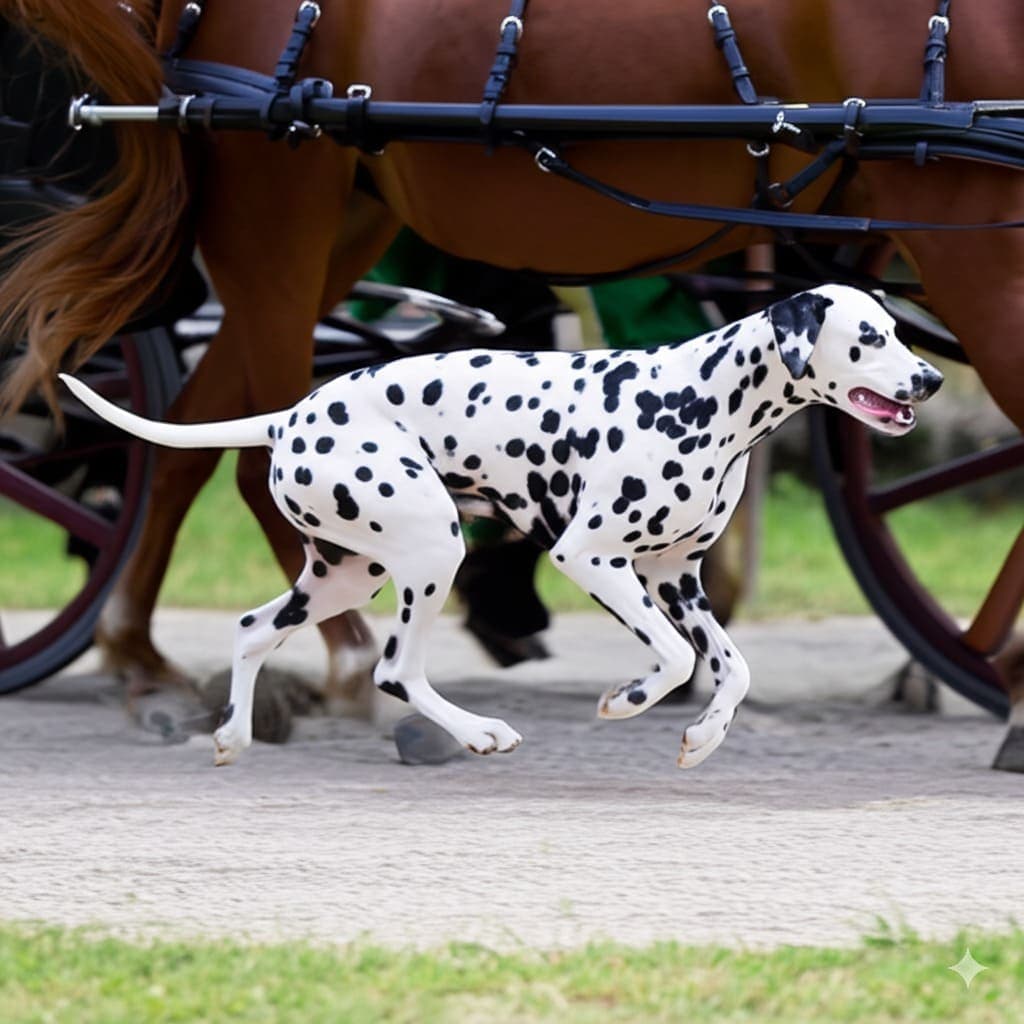
🐶 Dalmatian running alongside a horse or carriage
History of Dalmatian
The precise origins are debated, with depictions of spotted dogs alongside chariots found in ancient Egypt (3700 BC) and Greece. Some theorize a cross between the Cretan Hound and the White Antelope Dog around 400 BC.
Strong historical ties link spotted dogs to the Dalmatia region of Croatia from the 14th century. Written references like 'Canis Dalmaticus' by the Bishop of Đakovo in 1375 solidify this connection, though the name 'Dalmatian' appeared later (late 1790s).
During England's Regency era (1811-1820), they became popular 'Spotted Coach Dogs,' bred for endurance to run alongside carriages, guarding them and the horses. This role shaped their high energy, stamina, and loyalty.
Their affinity for horses led them to work alongside horse-drawn fire engines, clearing paths and calming horses. They guarded equipment during fires, becoming iconic firehouse mascots, a tradition that persists today.
Dalmatian Popularity
Historically popular as status symbols for carriage owners and later associated with heroic firefighters. Recognized by major kennel clubs by the late 19th/early 20th century.
Disney's '101 Dalmatians' (1961) significantly boosted popularity. A 1985 re-release and 1996 live-action film caused massive surges, especially around 1993 (US) and 1996 (UK).
This led to overbreeding and impulse adoptions by unprepared owners, resulting in many Dalmatians ending up in shelters.
Currently, popularity is stable. AKC ranked them 47th (2023), 48th (2024), and 49th (2022) in the US. UKC classifies them in the Companion Dog group.
Did you know?
Dalmatian puppies are born completely white! Their signature spots begin to appear around 10 days after birth and continue developing until they are about 18 months old. Each Dalmatian has a unique spot pattern, like a fingerprint.
Dalmatian Dog Breed Size and Physical Traits
Size of Dalmatian dog Breeds
Size Category
Medium to Large
Height
Male
19-23 inches
Female
19-23 inches
Weight
Male
45-70 lbs
Female
45-70 lbs
Appearance of Dalmatian dog Breeds
- Coat Type
- Dalmatians have a short, fine, dense coat. Long-coated variants exist but are not standard.
- Eye Size & Color
- Dalmatian dog breed has medium-sized, somewhat rounded or oval eyes. Color is typically dark brown (black-spotted) or light brown/amber (liver-spotted). Eye rims are fully pigmented (black or liver brown).
- Ear Size & Shape
- Dalmatian dog breed has moderate-sized drop ears (floppy), set rather high and carried close to the head. They are wide at the base and taper to a rounded point.
- Tail
- Dalmatian dog breed has a fairly long tail, strong at the base and tapering towards the end, carried with a slight upward curve. It is set neither too high nor too low.
Description of Dalmatians Appearance
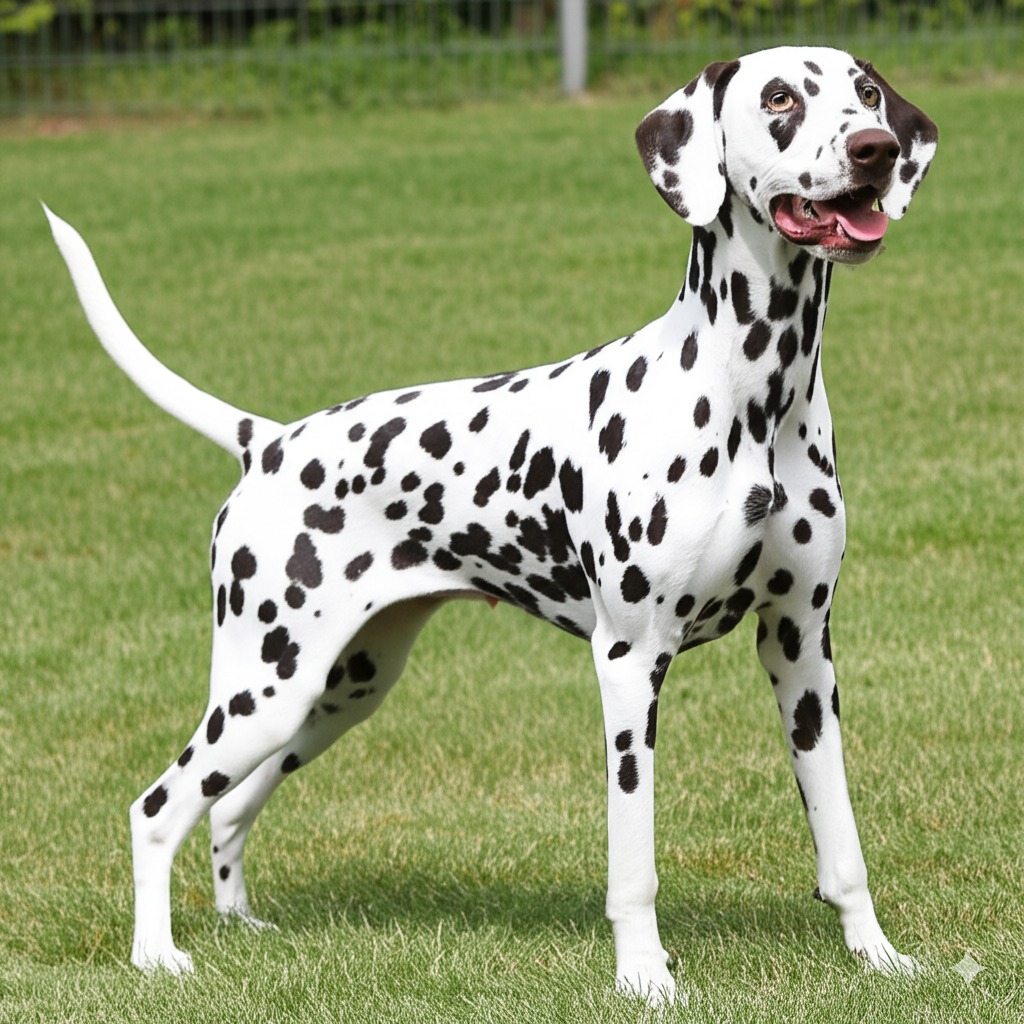
👀 How does Dalmatian look like?
- The Dalmatian is a well-balanced, muscular, and athletic dog of medium to large size.
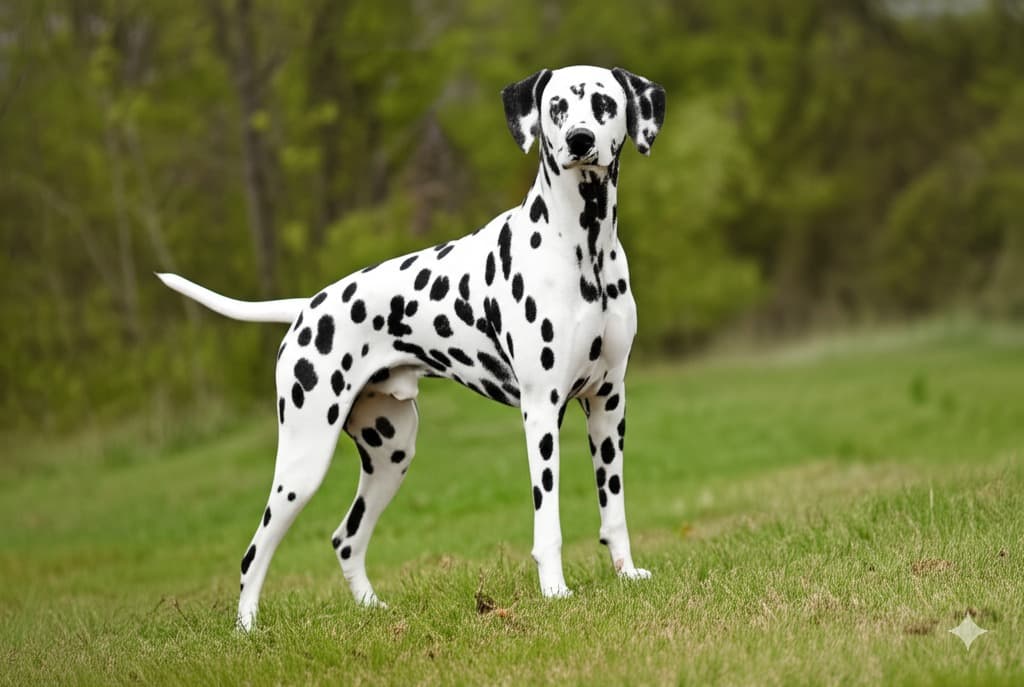
- Their most defining feature is the unique spotted coat; spots are typically black or liver, 2-6 cm in diameter, on a pure white base.
- Puppies are born completely white, with spots appearing within 10 days and developing fully by 18 months.
- The coat is usually short, fine, and dense.
- Their physique reflects their history as endurance carriage dogs.
Coat Colors of Dalmatian dogs
Black Spotted (White/Black)
Liver Spotted (White/Brown)
Blue Spotted
Brindle Spotted
Lemon/Orange Spotted
Tricolor
Distinctive Features of Dalmatian dog breeds
- Unique black or liver spotted coat on a white background
- Born pure white, spots develop later
- Elegant, athletic, muscular build
- Historical role as a carriage dog
Dalmatian Environment, Barking, Trainability and More...
Barking Level of Dalmatian
Moderate
Dalmatians are alert watchdogs and will bark to notify owners of visitors or unusual sounds, but aren't typically nuisance barkers.
Trainability of Dalmatian
Moderate to Good
Dalmatians are intelligent and eager to please but can have an independent streak. They respond best to positive reinforcement, consistency, and patience.
Energy Level of Dalmatian
Very High
Dalmatians possess exceptional stamina and require significant daily exercise (at least 1.5-2 hours, often more) to prevent behavioral issues.
Friendly Environment Description of Dalmatians
- Dalmatians thrive in active households where they receive plenty of attention and exercise.
- They ideally need a home with a securely fenced yard to safely expend their high energy.
- Apartment living is challenging unless owners are highly dedicated to providing extensive daily outdoor activity (1.5-2+ hours).
- Dalmatians crave human companionship and can suffer from separation anxiety, becoming destructive or depressed if left alone for long periods.
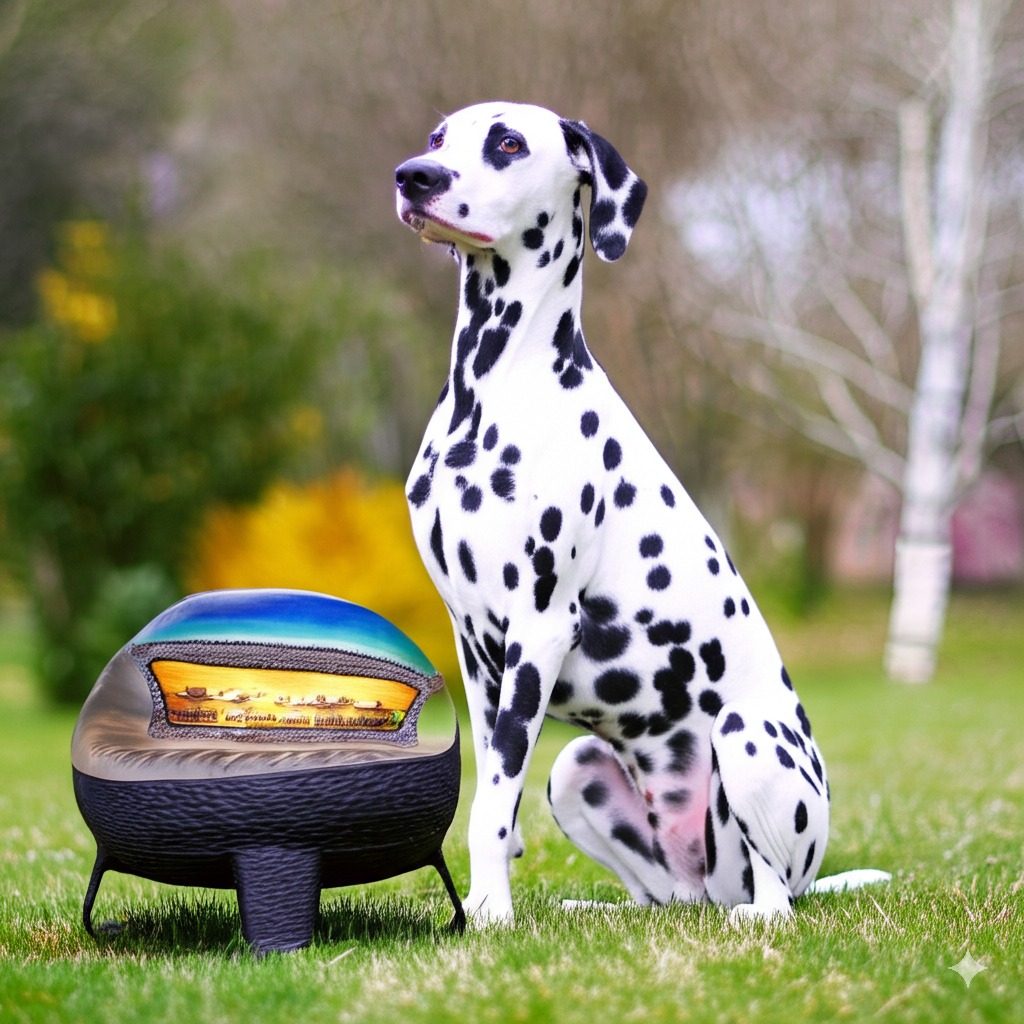
🏠 Dalmatian dog breed in its home environment
Personality Traits of Dalmatian dog breed
IntelligentEnergeticPlayfulLoyalFriendlyAffectionateDedicatedAlertReserved with strangersSometimes stubborn
Nature
Dalmatians are generally intelligent, energetic, playful, and outgoing with their families.
Affectionate
They are deeply loyal, dedicated, and affectionate companions to their people.
Curious
Their intelligence requires mental stimulation to prevent boredom.
Sociable
Generally friendly, but can be reserved or aloof with strangers. Early socialization is crucial for good interactions with unfamiliar people and dogs.
Gentle
Good with older children, but high energy might be overwhelming for very young kids. Supervision is recommended.
Intelligence
Highly intelligent, which aids training but can also contribute to stubbornness if not motivated correctly.
Dalmatians are good with:
FamiliesOlder ChildrenHorsesOther dogs (with proper socialization)
Dalmatian Dog Breed Care & Grooming Needs
Shedding Level of Dalmatian
Moderate to Heavy
Dalmatians shed considerably year-round, with heavier shedding periods in spring and fall. Their short, stiff hairs can embed in fabric.
Grooming Needs of Dalmatian
Low
Beyond managing shedding with regular brushing, Dalmatians have minimal grooming needs. Occasional baths are sufficient.
Grooming Tips
Brush your Dalmatian weekly (or more often during heavy shedding) with a rubber brush, grooming mitt, or firm bristle brush to remove loose hair. Occasional baths (monthly or as needed). Regular nail trims, ear cleaning, and teeth brushing are essential for overall health. Minimal 'doggy odor' reported.
Drooling Frequency of Dalmatian
Low
Dalmatians are generally not considered a breed prone to excessive drooling.
Dalmatians Daily Exercise Requirements
Minimum Daily Activity of Dalmatian
At least 1.5 - 2 hours per day (often more)
Dalmatians have exceptional energy and stamina from their carriage dog history. They need extensive daily physical activity and mental stimulation to stay happy and well-behaved. Insufficient exercise leads to behavioral problems.
Recommended Activities for Dalmatians
Brisk WalkingJogging/Running (with owner, once mature)HikingPlaying FetchAgility TrainingObedience CompetitionsFlyballGundog TrainingSwimming (if they enjoy it)Puzzle Toys & Interactive Games
Living Space Compatibility of Dalmatians
Yard Requirement
Secure Yard Highly Recommended
A securely fenced yard is highly beneficial for Dalmatians to run and play safely, helping them meet their high exercise requirements.
Apartment Living: Not Ideal
Not ideal for apartments due to very high energy needs. Possible only with extremely dedicated owners providing extensive daily exercise and mental stimulation outside the home.
Living Considerations for Dalmatians
- Requires significant time commitment for exercise (1.5-2+ hours daily).
- Needs a securely fenced yard ideally.
- Sheds considerably year-round.
- Craves companionship; prone to separation anxiety if left alone often.
- Needs early and consistent socialization.
- Requires specific low-purine diet to prevent stones.
- Potential for deafness requires awareness and potential adaptation.
Dalmatian Dog Lifespan and Health Issues
Average Lifespan of Dalmatians
11-13years
Common Health Issues of Dalmatians
Congenital Deafness (Unilateral or Bilateral)
Significant genetic predisposition; ~8% bilateral, 22-24% unilateral. BAER testing recommended.
Urinary Stones (Urate / Hyperuricosuria - HUU)
Common due to unique uric acid metabolism. Requires lifelong low-purine diet and high water intake.
Hip Dysplasia
Malformation of the hip joint; screening recommended for breeding stock.
Skin Allergies
Can be triggered by food or environmental factors.
Copper Storage Disease
Excessive copper buildup in the liver.
Epilepsy
Neurological disorder causing seizures.
Eye Problems
Including glaucoma and iris sphincter dysplasia.
Dalmatian Bronze Syndrome (Dal Crud)
Skin condition of unknown origin.
Autoimmune Thyroiditis
Relatively common autoimmune condition.
Laryngeal Paralysis
Weakening of larynx muscles.
Preventative Care of Dalmatians
- Choose reputable breeders who conduct health screenings (BAER for hearing, hip scores, etc.).
- Implement and maintain a strict low-purine diet.
- Ensure constant access to fresh water.
- Regular veterinary check-ups for early detection of issues.
- Early and ongoing socialization.
- Consistent exercise and mental stimulation.
- Routine dental care and ear checks.
What to feed Dalmatian? Dalmatian's diet and Nutrition
Recommended Diet for Dalmatian dog breed
High-quality dog food appropriate for age, size, and (high) activity level. CRITICAL: Must be a low-purine diet to minimize risk of urate urinary stones. Avoid high-purine ingredients like organ meats, game meats, sardines, mackerel, yeast.
Typical Feeding Schedule of Dalmatians
| Age Group | Feeding Frequency |
|---|---|
| Puppies (under 6 months) | 3 meals/day |
| Adolescents (6-12 months) | 2 meals/day |
| Adults | 2 meals/day |
| Seniors | 2 smaller meals/day, potentially adjusting formula |
Sensitivities & Considerations of Dalmatians
Potential Food Sensitivities of Dalmatians
Some Dalmatians are prone to food sensitivities or allergies (common triggers: corn, wheat, soy, certain proteins like chicken/beef). Symptoms include skin issues (itching, rash), GI upset, ear infections. Elimination diet may be needed for diagnosis.
Dietary Considerations of Dalmatians
- Low-purine diet is ESSENTIAL for preventing urate stones.
- Focus on moderate protein from low-purine sources (chicken, turkey, lamb, eggs, low-purine fish like salmon).
- Avoid high-purine foods (organ meats, game, specific fish, legumes, certain veggies like cauliflower/spinach/peas/mushrooms, yeast).
- Constant access to plenty of fresh, clean water is crucial for diluting urine.
- Monitor for signs of food allergies/sensitivities.
- Consult veterinarian or canine nutritionist for specific diet plan.
Weight Management of Dalmatians
Maintain a healthy weight through portion control and exercise, though the primary dietary focus is purine content rather than extreme obesity risk as seen in some other breeds.
Signs of Healthy Weight of Dalmatians
- Easily palpable ribs with a slight fat cover.
- Visible waistline when viewed from above.
- Abdomen tucked up when viewed from the side.
- Consult vet or use a Body Condition Score chart.
Tips for Healthy Feeding of Dalmatians
- Strictly adhere to a low-purine diet plan.
- Measure food portions accurately.
- Ensure unlimited access to fresh water.
- Monitor for any signs of urinary issues or allergies.
- Factor low-purine treats into daily intake.
- Consult your vet about appropriate food choices and supplements.
Is Dalmatian a good match for you?
Dalmatians are best suited for highly active individuals or families with previous dog experience who can provide significant daily exercise (1.5-2+ hours), consistent positive reinforcement training, early socialization, and lots of companionship. Owners must be prepared for substantial shedding, potential stubbornness, and the critical need for a low-purine diet and awareness of potential deafness.
Dalmatians are a Great Match For
- Very active individuals, runners, hikers
- Families with older children who can handle high energy
- Experienced dog owners familiar with training needs
- Those committed to providing extensive daily exercise and mental stimulation
- Owners who are home most of the day or can provide companionship
- People with securely fenced yards
- Those prepared to manage shedding and dietary needs
- Individuals involved with horses
Dalmatians May be Challenging For
- Sedentary individuals or families
- First-time dog owners (can be overwhelming)
- Apartment dwellers unless exceptionally committed to outdoor activity
- Owners seeking a low-shedding breed
- People who are away from home for long hours
- Those looking for a dog with low exercise needs
- Individuals unprepared for potential stubbornness or health issues (deafness, stones)
- Homes with very young children (due to energy levels)