Sniffing...
England
Beagle
HoundFriendlyCuriousMerrySmall to Medium10-15 years
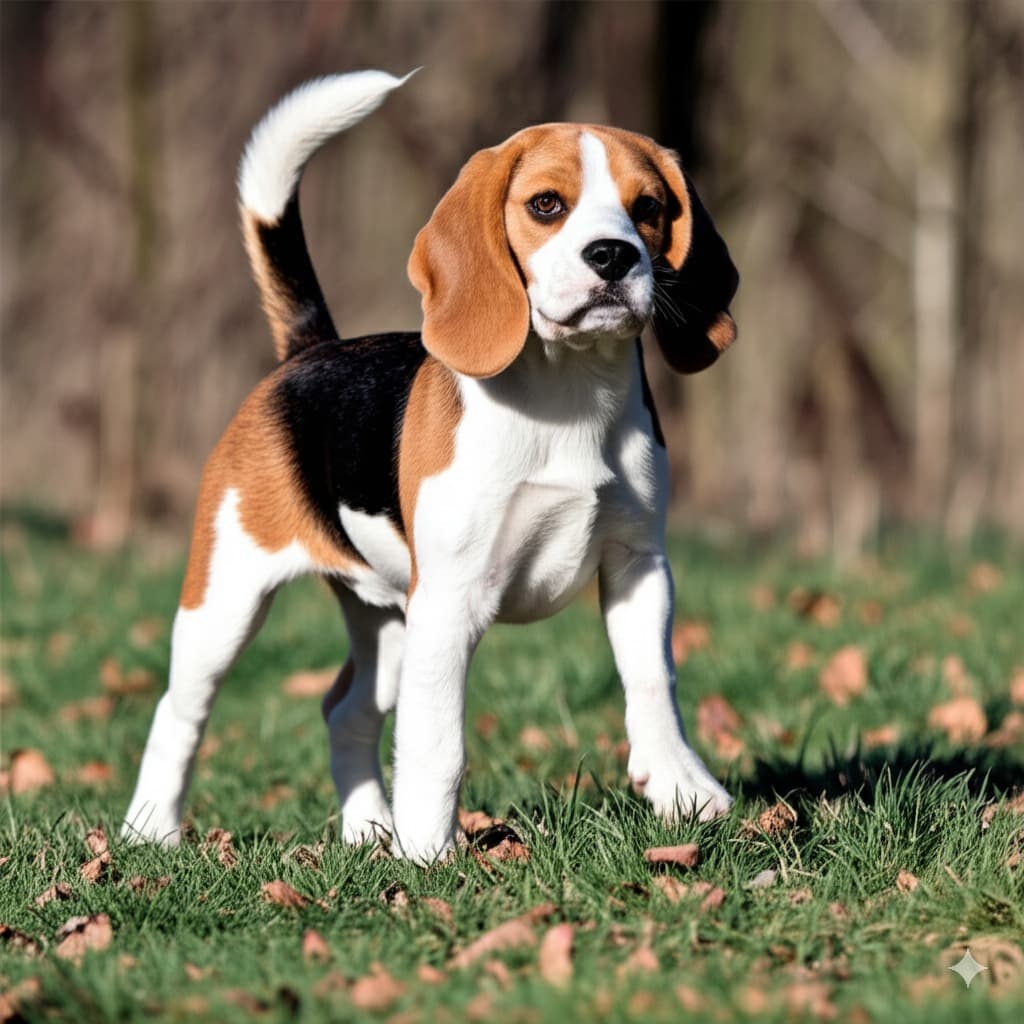
The Beagle is a small to medium-sized scent hound breed originating from England. Renowned for their incredible sense of smell, second only to the Bloodhound, they were historically developed primarily for tracking hare ('beagling'). They are sturdy, compact dogs built for endurance. Distinctive features include large, soft, low-set ears, big brown or hazel eyes with a gentle, pleading expression, and a tail carried high, often tipped with white ('flag') to help hunters see them in tall grass. Their short, dense, weather-resistant coat comes most commonly in tricolor (black, tan, and white), but also bicolor varieties like red and white, lemon and white, or tan and white.
Important Disclaimer:The information provided on this page about the Beagle is intended for general knowledge and informational purposes only and does not constitute professional veterinary advice. Always consult with a qualified veterinarian for any health concerns or medical conditions related to your dog. The breed identification provided by our AI tool is a prediction and should not be considered a definitive diagnosis.
Beagle Dog Breed Overview
- Breed Group
- Hound
- Origin
- England (Great Britain)
- Purpose
- Hunting hare and rabbits by scent (Beagling)
- Size
- Small to Medium
- Other Names
- English Beagle
- Lifespan
- 10-15 years
- Temperament
- MerryFriendlyCuriousSociableGentleDetermined
- Activity Level
- High
- Trainability
- Intelligent but independent; requires patience and consistency
- Grooming
- Low (weekly brushing)
- Shedding
- Moderate (seasonal shedding)
- Barking
- Very Vocal (prone to barking, baying, and howling)
- Good with
- Health Issues
- ObesityEar InfectionsEpilepsyHypothyroidismIntervertebral Disc Disease (IVDD)
- Suited For
- Active owners/families
- Homes with secure yards
- Patient trainers
- Owners tolerant of noise
- Families, Children, Other Dogs
Beagle History & Origin: Popularity of Beagles
The Beagle is a small to medium-sized scent hound breed originating from England. Renowned for their incredible sense of smell, second only to the Bloodhound, they were historically developed primarily for tracking hare ('beagling'). They are sturdy, compact dogs built for endurance. Distinctive features include large, soft, low-set ears, big brown or hazel eyes with a gentle, pleading expression, and a tail carried high, often tipped with white ('flag') to help hunters see them in tall grass. Their short, dense, weather-resistant coat comes most commonly in tricolor (black, tan, and white), but also bicolor varieties like red and white, lemon and white, or tan and white.
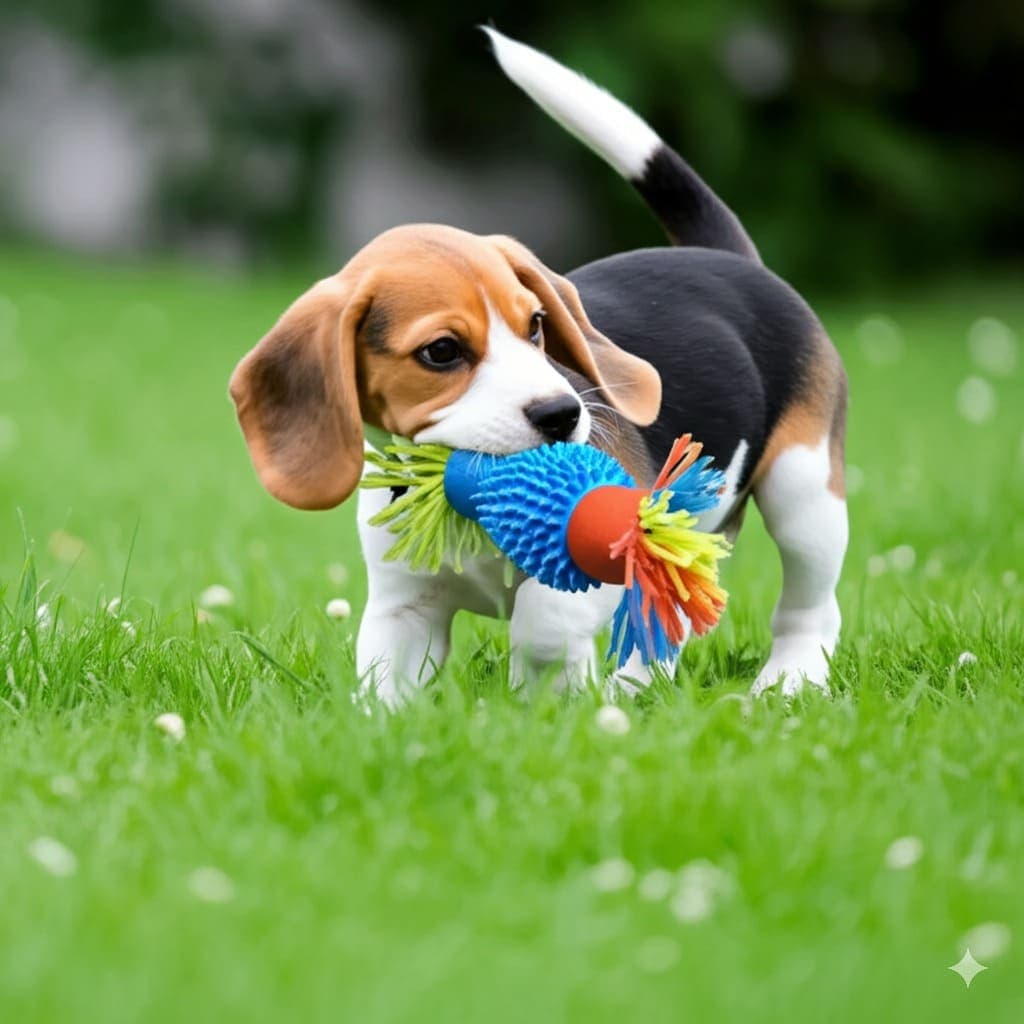
🐶 Puppy Beagle with its fav toy
History of Beagle
The exact origins of the Beagle are somewhat obscure, as small pack hounds used for hunting hare and rabbit in Great Britain predate Roman times. The modern Beagle breed was developed in England around the 1830s from several strains, including the Talbot Hound, North Country Beagle, and Southern Hound. They were bred specifically for 'beagling' – hunting hare on foot, a popular activity for gentlemen. Their small size, excellent nose, and cheerful disposition made them ideal companions for this pursuit. Two height varieties evolved: the smaller 'Pocket Beagles' (under 10 inches) and the larger hounds common today.
Beagles gained popularity in the United States after the Civil War and were recognized by the American Kennel Club (AKC) in 1885. Their friendly nature and manageable size quickly made them popular family pets.
Why is Beagle so popular?
The Beagle consistently ranks among the most popular dog breeds, largely due to their incredibly friendly, merry, and outgoing temperament. They are generally excellent with families, children, and other dogs, thriving on companionship. Their convenient small-to-medium size makes them adaptable to various homes (though not ideal for apartments without significant owner commitment), and their classic hound appearance with floppy ears and expressive eyes is widely appealing. Furthermore, their recognizable image, partly thanks to Snoopy from the Peanuts comic strip (inspired by a Beagle), has cemented their place in popular culture.
Did you know?
Beagles have three distinct vocalizations! They can make a standard bark, a unique yodel-like sound called a 'bay' (often used when hunting or excited by a scent), and a mournful howl. Their name might even come from the French word 'begueule,' meaning 'gaped throat,' referencing their vocal nature.
Beagle Dog Breed Size and Physical Traits
Size of Beagle dog Breeds
Size Category
Small to Medium
Height
Male
13-15 inches
Female
13-15 inches
Weight
Male
20-30 lbs
Female
20-30 lbs
Appearance of Beagle dog Breeds
- Coat Type
- Beagles have short, dense, smooth, hard, weather-resistant coat
- Eye Size & Color
- Beagles dog breed have large, set apart, brown or hazel, with a gentle and pleading expression
- Ear Size & Shape
- Beagles dog breed have long, wide, pendant (floppy), set low, rounded tips, reaching nearly to the nose
- Tail
- Beagles dog breed have moderately long, set high, carried gaily ('flag-like'), but not curled over the back, often tipped with white
Description of Beagles Appearance
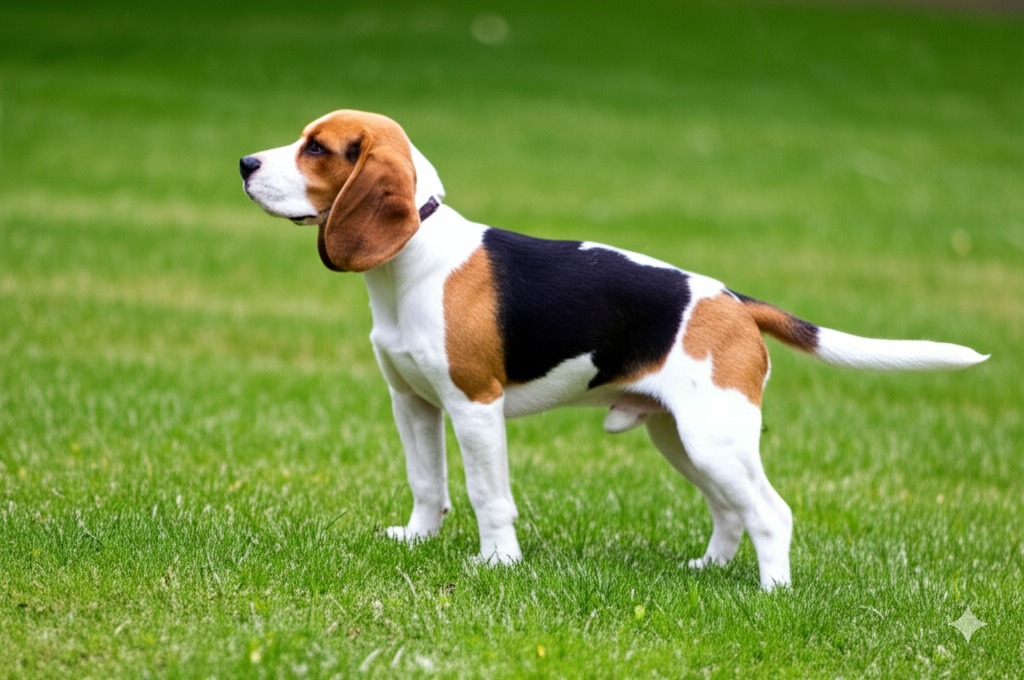
👀 How does Beagle look like?
- The Beagle dog breed is a sturdy, squarely-built hound, looking like a smaller version of the English Foxhound.
- There are two height varieties of Beagles recognized: those not exceeding 13 inches at the shoulder, and those between 13 and 15 inches.
- Beagles possess a broad head, slightly domed skull, large gentle brown or hazel eyes, and famously long, low-set, floppy ears.
- The Beagle's body is compact and muscular, built for stamina rather than speed, with a deep chest and straight back.
- The Beagle's tail is carried high, like a flag, often with a white tip historically used to spot the dog in the field.
- The Beagle dog breed's coat is short, dense, and weather-resistant, acceptable in any true hound color, with tricolor being the most common.
Coat Colors of Beagle dogs
Tricolor (Black/Tan/White)
Red & White
Lemon & White
Tan & White
Black
White
Brown/Tan
Distinctive Features of Beagle dog breeds
- Beagles dog breed resembles a miniature Foxhound
- Beagles dog breed have long, low-set floppy ears
- Beagles dog breed have white-tipped tail
Beagle Environment, Barking, Trainability and More...
Barking Level of Beagle
High
Beagle dogs are very vocal; prone to barking, baying, and howling, especially when bored, lonely, or tracking a scent.
Trainability of Beagle
Moderate to Challenging
Beagle dogs are intelligent but easily distracted by scents and can be stubborn. Requires patient, consistent, positive reinforcement training.
Energy Level of Beagle
High
Beagle dogs are energetic dogs requiring significant daily exercise to stay happy and healthy.
Friendly Environment Description of Beagles
- Beagle dogs thrive in an environment rich with companionship and opportunities for exploration.
- Beagles are ideally suited to a home with a securely fenced yard, they need safe spaces to run and follow scents without the risk of wandering off, driven by their powerful noses.
- As highly social pack animals, Beagles crave interaction and do poorly when isolated for long hours, preferring households where family members or other canine companions are often present.
- While Beagles can adapt to apartment living, it demands significant commitment from owners to provide extensive daily walks, runs, and mental stimulation to satisfy their high energy levels and prevent boredom-induced behaviors like howling or destructiveness.
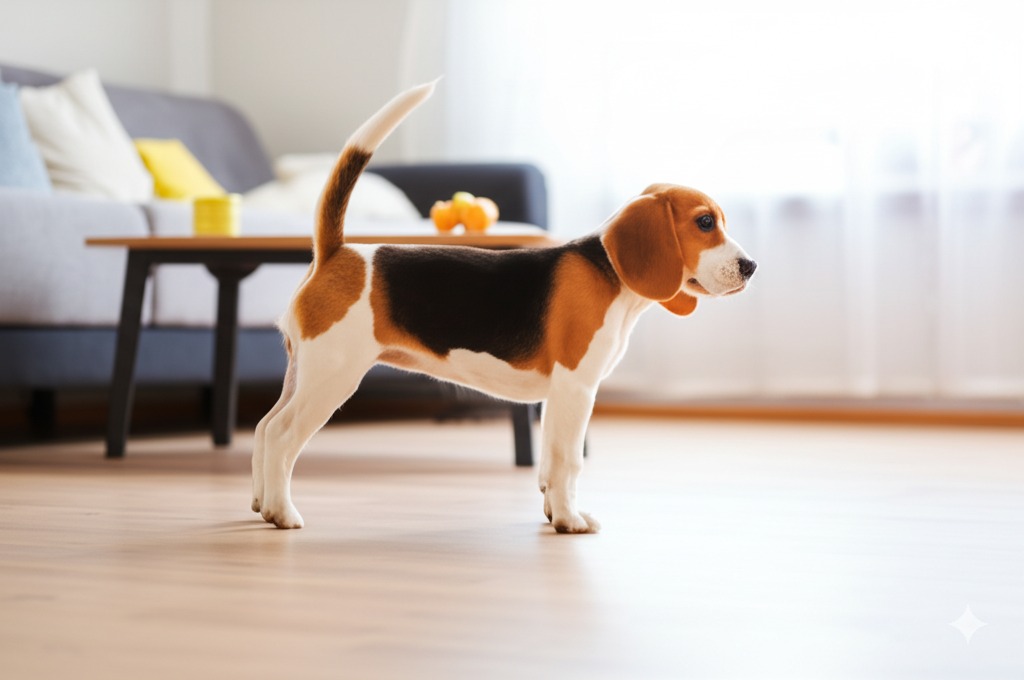
🏠 Beagle dog breed in its home environment
Personality Traits of Beagle dog breed
MerryFriendlyCuriousSociableGentleDeterminedOutgoing
Nature
Beagles are happy-go-lucky, amiable, and pack-oriented.
Affectionate
Beagle dogs are generally affectionate with their families but not overly demanding.
Curious
Beagles' nose leads them; constantly exploring the world through scent.
Sociable
The Beagle dog breed typically gets along well with people and other dogs; bred to hunt in packs.
Gentle
Beagles are usually gentle and tolerant, making them good family companions.
Intelligence
Beagles are smart but independent; excels at scent work but can be challenging for obedience training due to distractibility.
Beagles are good with:
FamiliesChildrenOther Dogs
Beagle Dog Breed Care & Grooming Needs
Shedding Level of Beagle
Moderate
Beagle dogs shed moderately year-round, with heavier shedding seasonally (spring/fall). Weekly brushing helps manage loose hair.
Grooming Needs of Beagle
Low
Beagles require minimal grooming beyond regular brushing. No professional trimming needed.
Grooming Tips
Brush your Beagle weekly with a hound mitt or medium-bristle brush. Crucially, check and clean ears weekly to prevent infections due to poor air circulation. Regular nail trims and dental care (brushing) are essential.
Drooling Frequency of Beagle
Low
Beagles are generally not prone to excessive drooling.
Beagles Daily Exercise Requirements
Minimum Daily Activity of Beagle
At least 60 minutes per day
Beagle dogs are active hounds needing at least one hour (often more) of daily exercise. This should include brisk walks, jogging, or playtime in a SECURELY fenced area. A Beagle's powerful scent drive means they should NEVER be trusted off-leash in an unfenced space.
Recommended Activities for Beagles
Brisk Walking/JoggingHiking (on leash)Running/Playing fetch in a securely fenced yardScent work / Nose games (highly recommended for Beagles)Canine sports like tracking or agilityPlaydates with other dogs
Living Space Compatibility of Beagles
Yard Requirement
Secure Yard Highly Recommended
For Beagles, a securely fenced yard is highly recommended (at least 5-6 feet high, potentially reinforced underground) to allow safe off-leash play and prevent escapes driven by scent.
Apartment Living: Not Ideal
Beagles are not ideal for apartments due to high energy, exercise needs, and potential for loud vocalizations (barking/howling). Can work only with highly dedicated owners providing extensive outdoor time and stimulation.
Living Considerations for Beagles
- Beagles require a VERY secure fence (climbers and diggers).
- High escape risk due to strong scent drive typical of Beagles.
- Beagles can be very noisy (barking/baying/howling); may disturb neighbors.
- Beagles are prone to separation anxiety if left alone frequently.
- Beagles are adaptable to most climates but need shelter from extremes.
- Beagles can be prone to digging in the yard.
Beagle Dog Lifespan and Health Issues
Average Lifespan of Beagles
10-15years
Common Health Issues of Beagles
Obesity
Beagles are highly prone due to strong appetite; requires strict diet management.
Ear Infections (Otitis Externa)
Beagle's floppy ears trap moisture and debris, increasing risk.
Epilepsy
Inherited seizure disorder seen in the Beagle breed.
Hypothyroidism
Underactive thyroid gland affecting Beagle's metabolism.
Intervertebral Disc Disease (IVDD)
Risk of spinal disc problems due to Beagle's conformation.
Cherry Eye
Prolapse of the gland of the third eyelid common in Beagles.
Glaucoma
Increased pressure within the eye affecting Beagles.
Hip Dysplasia
Malformation of the hip joint seen in Beagles.
Beagle Pain Syndrome (Steroid Responsive Meningitis)
Inflammatory condition affecting younger Beagles.
Preventative Care of Beagles
- Choose Beagle breeders who screen for genetic conditions (hips, eyes, thyroid, epilepsy).
- Strict weight management through diet and exercise for Beagles.
- Regular weekly ear cleaning and inspection for your Beagle.
- Consistent veterinary check-ups and vaccinations.
- Dental hygiene to prevent periodontal disease in Beagles.
What to feed Beagle? Beagle's diet and Nutrition
Recommended Diet for Beagle dog breed
High-quality commercial dog food formulated for small/medium breeds like Beagles, appropriate for their age (puppy, adult, senior) and activity level. Portion control is absolutely ESSENTIAL to prevent obesity in Beagles.
Typical Feeding Schedule of Beagles
| Age Group | Feeding Frequency |
|---|---|
| Puppies (under 6 months) | 3 meals/day |
| Adolescents (6-12 months) | 2 meals/day |
| Adults | 2 meals/day (recommended over one large meal) |
| Seniors | 2 smaller meals/day, potentially adjusting formula for senior Beagle needs |
Sensitivities & Considerations of Beagles
Potential Food Sensitivities of Beagles
No specific Beagle breed-wide sensitivities, but individual Beagles can develop allergies (common culprits: chicken, beef, dairy, wheat, soy). Monitor for signs like itching, digestive upset, ear infections.
Dietary Considerations of Beagles
- Beagles have EXTREME risk of obesity ('food motivated' is an understatement). NEVER free-feed.
- Measure food portions precisely using a measuring cup.
- Limit treats strictly; use low-calorie options (carrots, green beans, small pieces of kibble).
- Ensure constant access to fresh, clean water.
- Consult your veterinarian for personalized Beagle diet recommendations.
- Beagles are notorious counter-surfers and trash-can raiders; keep food securely stored.
Weight Management of Beagles
Lifelong, vigilant weight management is critical for Beagles. Obesity severely increases the risk of IVDD, hip dysplasia, diabetes, heart disease, and other health problems, potentially shortening lifespan. Regularly monitor body condition.
Signs of Healthy Weight of Beagles
- Easily palpable ribs with a slight fat cover on your Beagle.
- Visible waistline when viewed from above.
- Abdomen tucked up when viewed from the side.
- Consult vet or use a Body Condition Score chart for Beagles.
Tips for Healthy Feeding of Beagles
- Measure food accurately for each meal for your Beagle.
- Adjust portions based on age, activity level, and body condition.
- Factor treats into daily caloric intake (max 10% of calories).
- Use puzzle toys or slow-feeder bowls to make mealtime last longer for your Beagle.
- Avoid feeding table scraps to Beagles.
- Maintain a consistent feeding schedule.
Is Beagle a good match for you?
Beagles are best suited for active individuals or families who appreciate a friendly, merry companion and can provide significant daily exercise, patient and consistent training, plenty of companionship, and secure containment. Owners must be prepared to manage a Beagle's strong prey drive, potential for vocalization, and tendency towards scent-driven stubbornness.
Beagles are a Great Match For
- Active families with children (with supervision) who understand Beagles
- Individuals or couples with an active lifestyle (walking, hiking) suitable for Beagles
- Owners committed to positive reinforcement training for Beagles
- Households with a securely fenced yard for Beagles
- People who enjoy Beagle companionship for much of the day
- Those tolerant of typical Beagle hound vocalizations
Beagles May be Challenging For
- Sedentary individuals or families not suited for active Beagles
- Apartment dwellers unable to provide extensive daily outdoor exercise/stimulation for Beagles
- Owners who need a consistently quiet dog (unlike Beagles)
- People who are away from home for very long hours daily (not ideal for Beagles)
- First-time owners unprepared for Beagle scent hound traits (stubbornness, recall challenges)
- Homes without secure fencing or commitment to leashed exercise for Beagles
- Those seeking a highly obedient, easily trainable dog off-leash (unlike Beagles)