Sniffing...
Western Europe
Papillon
Toy GroupCompanion DogIntelligentAffectionateLivelySmall12-17 years
The Papillon, often affectionately termed the 'butterfly dog,' stands as a testament to centuries of selective breeding that has cultivated both striking beauty and profound intelligence. This papillon dog breed's most distinguishing feature, its large, fringed ears, indeed resembles the outstretched wings of a butterfly, giving it its evocative French name. Beyond this captivating appearance, the Papillon possesses a charming and spirited papillon personality that has endeared it to royalty and common households alike throughout history. This profile delves into the rich history, distinctive physical attributes, nuanced papillon dog temperament, and care requirements of this remarkable papillon breed, offering a comprehensive understanding for papillon enthusiasts and potential owners alike.
Important Disclaimer:The information provided on this page about the Papillon is intended for general knowledge and informational purposes only and does not constitute professional veterinary advice. Always consult with a qualified veterinarian for any health concerns or medical conditions related to your dog. The breed identification provided by our AI tool is a prediction and should not be considered a definitive diagnosis.
Papillon Dog Breed Overview
- Breed Group
- Toy Group
- Origin
- Western Europe (Belgium, France, Spain, Italy)
- Purpose
- Companion, Lap Warmer (Historically), Dog Sports, Therapy Dog
- Size
- Small/Toy
- Other Names
- Butterfly Dog, Continental Toy Spaniel (Phalène is drop-eared variety)
- Lifespan
- 12-17 years
- Temperament
- HappyAlertFriendlyOutgoingPlayfulConfidentIntelligentAffectionateLively
- Activity Level
- Moderate to High
- Trainability
- Highly Intelligent, Eager to Please, Highly Trainable
- Grooming
- Low (regular brushing, no undercoat)
- Shedding
- Low to Moderate
- Barking
- Alert Watchdog (can be vocal, especially to alert)
- Good with
- Health Issues
- Patellar LuxationDental DiseaseProgressive Retinal Atrophy (PRA)Collapsing TracheaPortosystemic Shunt (PSS)Heart Disease (Mitral Valve Disease)
- Suited For
- Owners seeking an intelligent and active papillon companion
- Apartment living (with sufficient exercise)
- Families with gentle children
- Individuals interested in dog sports
- Owners committed to training and mental stimulation for their papillons
- Families, Children (supervised), Other pets (with proper introduction)
Papillon History & Origin: Popularity of the Butterfly Dog
The Papillon, often affectionately termed the 'butterfly dog,' stands as a testament to centuries of selective breeding that has cultivated both striking beauty and profound intelligence. This papillon dog breed's most distinguishing feature, its large, fringed ears, indeed resembles the outstretched wings of a butterfly, giving it its evocative French name. Beyond this captivating appearance, the Papillon possesses a charming and spirited papillon dog personality that has endeared it to royalty and common households alike throughout history.
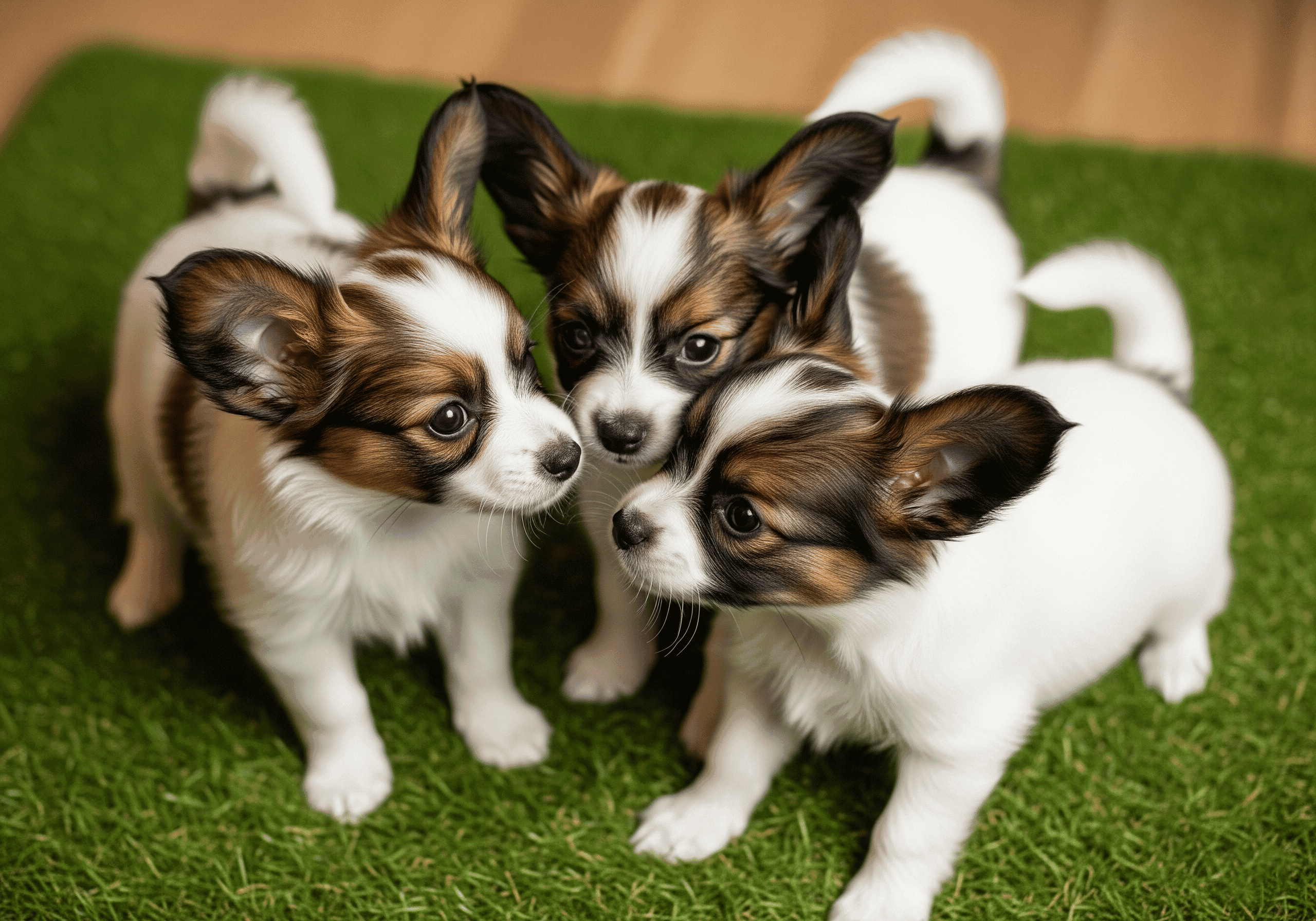
🦋 Papillon dog with its distinctive butterfly ears
History of Papillon
The Papillon dog breed's lineage is ancient, originating in Western Europe (Belgium, France, Spain, Italy) 500-700 years ago as companions for nobility. Spain and Bologna, Italy were significant in its early popularity. The original form was the drop-eared Phalène ('moth'). The erect-eared Papillon ('butterfly dog') appeared in the 16th century, gaining prominence by the 17th century due to selective breeding in France and Belgium. Both ear types can appear in the same litter of papillon dogs and puppies, indicating they are varieties of one papillon breed. Recognized by the AKC in 1915 and UKC in 1950. The FCI recognizes it as a 'Continental Toy Spaniel'.
Purpose and Popularity of Papillon
Historically, papillons served as 'lap warmers' and companions for European aristocracy, symbolizing wealth and status. Their role evolved as dogs became household pets. Today, the papillon dog is a popular companion known for its intelligence, affection, and adaptability. These papillons excel in dog sports and as therapy dogs. A Papillon named Kirby won Westminster Best in Show in 1999, boosting its modern popularity.
Did you know?
The Papillon is named for its distinctive large, fringed ears which resemble the outstretched wings of a butterfly ('papillon' is French for butterfly). The drop-eared variety is called Phalène, which means 'moth'.
Papillon Dog Breed Size and Physical Traits
Size of Papillon dog Breeds
Size Category
Small
Height
Male
8-11 inches (20-28 cm)
Female
8-11 inches (20-28 cm)
Weight
Male
3-10 lbs (1.5-5 kg)
Female
3-10 lbs (1.5-5 kg)
Appearance of Papillon dog Breeds
- Coat Type
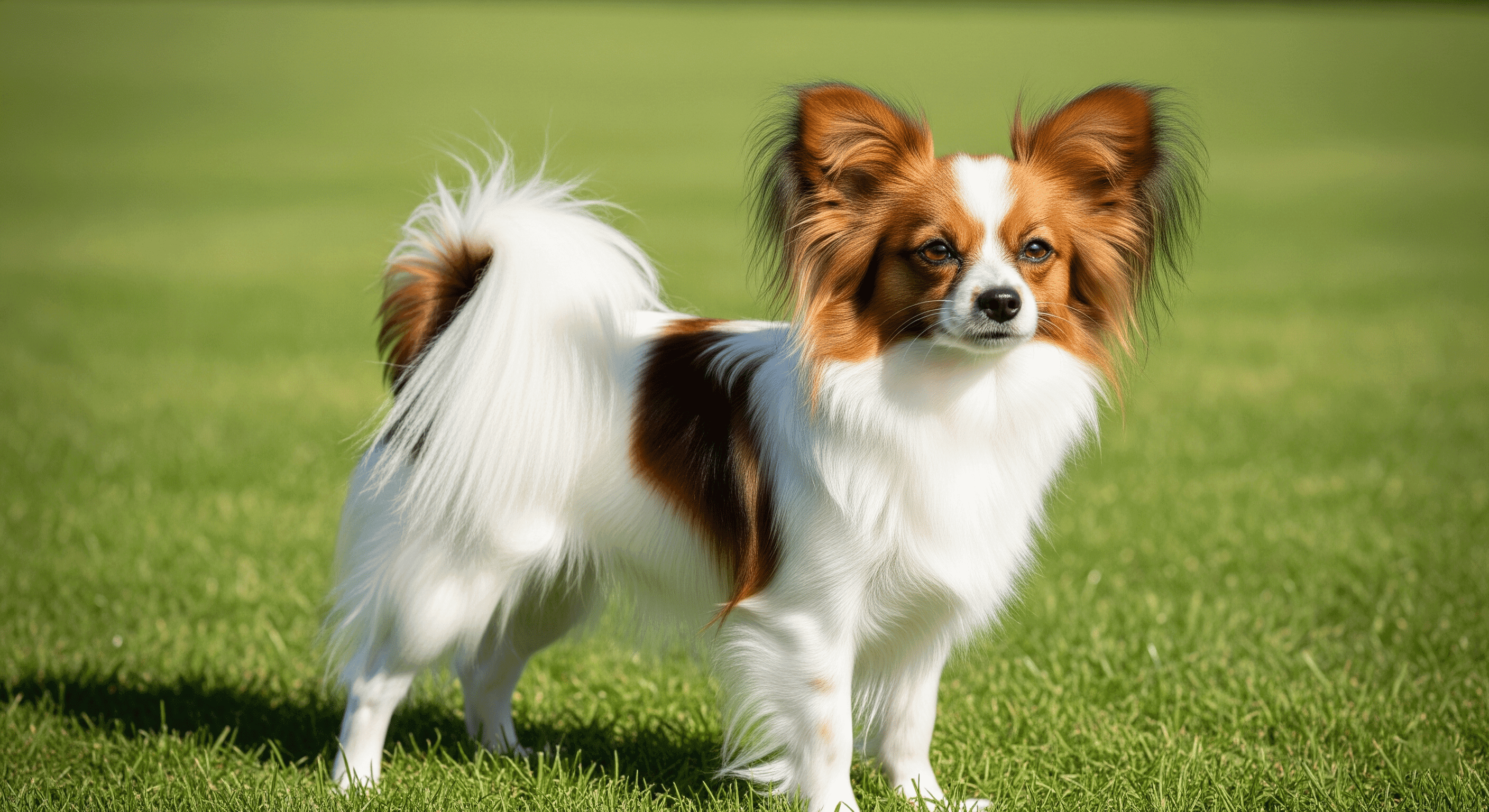
- Papillon coat is abundant, long, fine, silky, and flowing. The coat is single-layered, without any undercoat.
- Eye Size & Color
- Papillon eyes are dark, round, medium-sized, alert, and expressive. The black eye rims add to their distinctive papillon look.
- Ear Size & Shape
- Papillon ears are large, rounded, and set on the sides and towards the back of the head. They are erect (Papillon) or drop (Phalène). Erect ears are carried obliquely, forming a ~45-degree angle to the head when alert.
- Tail
- Papillon tail is set high, carried arched over the body, and has a long, flowing plume.
Description of Papillons Appearance
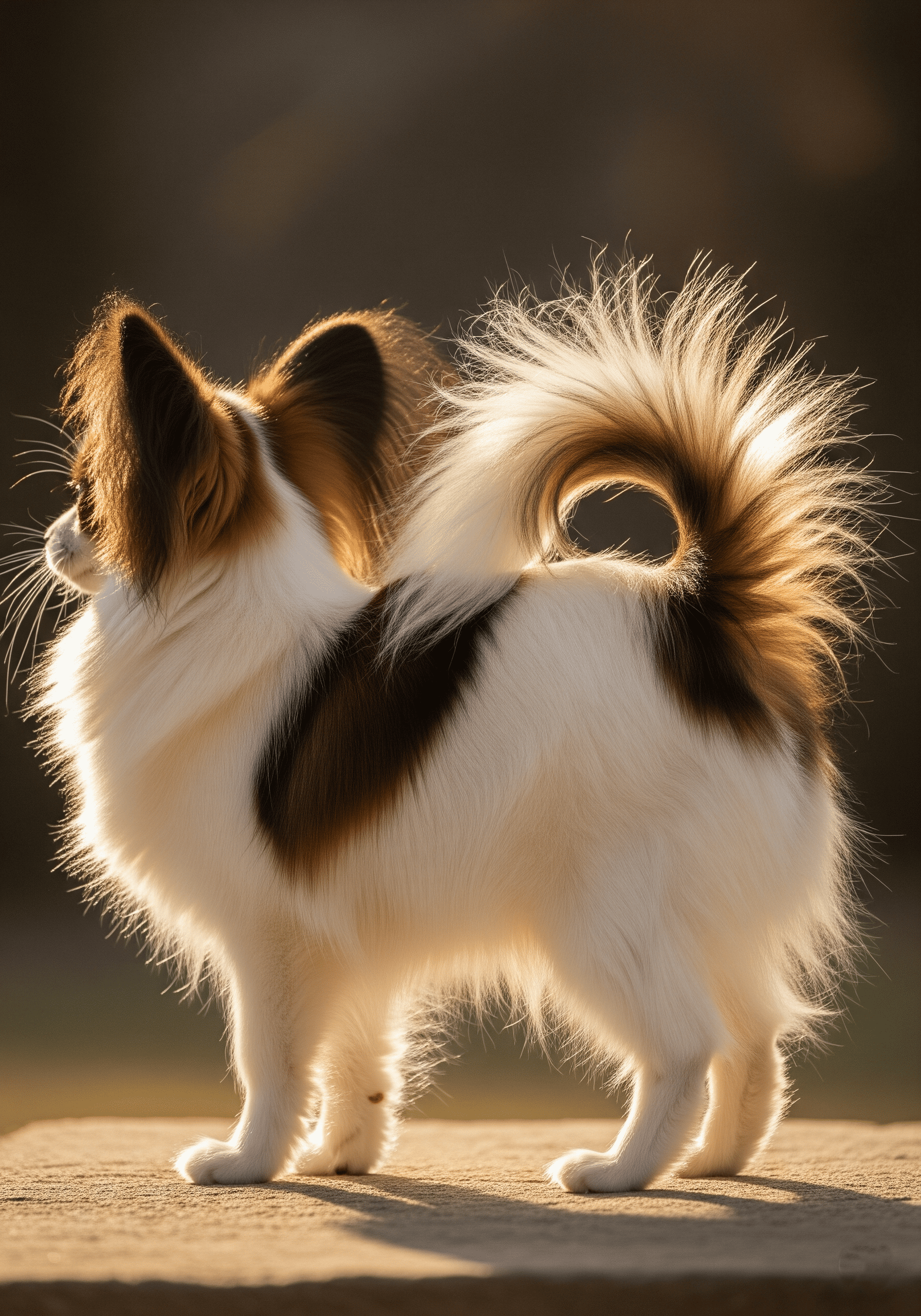
📏 Papillon dog breed showing its furry tail
- The dog breed Papillon is a small, fine-boned toy dog, known for its dainty yet surprisingly robust physique. Its body is slightly longer than it is tall.
- The most iconic feature of the papillon dog is its ears: either erect and oblique like a butterfly's wings (Papillon) or dropped (Phalène).
- Papillons typically stand 8-11 inches tall and weigh between 3-10 pounds.
- Their coat is long, fine, silky, and single-layered, always parti-colored (white with patches of any color). Common colors include black, lemon, red, sable, or tri-color patches on a white base. A white blaze on the head is preferred for this butterfly dog.
- They have a plumed tail that arches gracefully over their body, contributing to their elegant silhouette.
Coat Colors of Papillon dogs
White & Black
White & Lemon
White & Red
White & Sable
Tri-color (White, Black & Tan)
Distinctive Features of Papillon dog breeds
- Papillons have large, butterfly-like erect ears (Papillon type) or drop ears (Phalène type)
- The papillon dog breed is fine-boned yet robust, dainty, and graceful
- Papillons have long, silky, single coat; always parti-colored (white with patches)
- They have a plumed tail carried arched over the back
- They have an alert and intelligent expression, characteristic of the papillon dog personality
- They have slightly longer body than tall
Papillon Dog Personality, Barking, Trainability and More...
Barking Level of Papillon
Moderate
Papillons are alert and will bark to notify their owners of new sounds or approaching strangers, making them good little watchdogs. They are not typically nuisance barkers if their papillon personality is understood and they are properly trained and stimulated.
Trainability of Papillon
High
The Papillon dog breed is exceptionally intelligent and eager to please, making them highly trainable. They learn quickly and excel in obedience, agility, and learning tricks. Positive reinforcement methods work best for these papillons.
Energy Level of Papillon
Moderate to High for a toy breed
Despite their small size, Papillons are energetic and playful, requiring daily moderate exercise including walks and active play sessions to keep them happy and prevent boredom. The papillon dog temperament is active.
Friendly Environment Description of Papillons
- Papillons are highly social and thrive on human companionship, making them adaptable to various living environments, including apartments, as long as their social and exercise needs are met.
- They generally do well with children when supervised (due to their delicate build) and can get along with other pets, including cats, with proper introductions.
- Early socialization is key for this confident papillon breed to prevent 'small dog syndrome' or excessive shyness.
- They can be prone to separation anxiety if left alone for long periods.
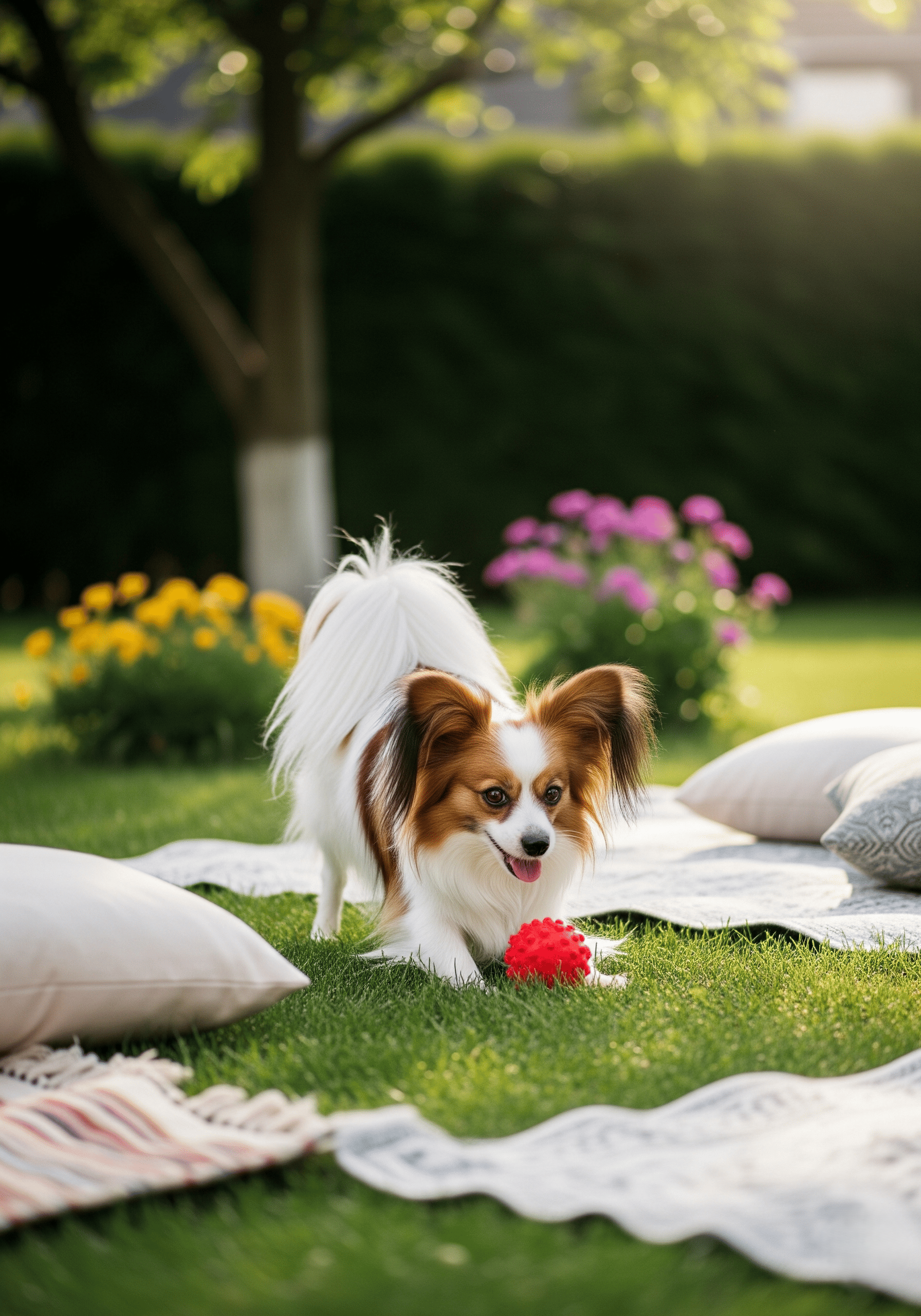
😊 Papillon dog personality and temperament
Personality Traits of Papillon dog breed
HappyAlertFriendlyOutgoingPlayfulConfidentIntelligentAffectionateLivelyEager to pleaseFearless (can be)
Nature
The papillon personality is typically happy, alert, and friendly. They are outgoing and playful, often described as confident and spirited, belying their small size.
Affectionate
Deeply affectionate with their families, Papillons thrive on human companionship and bond closely with their people.
With Children
Generally good with children, but interactions should be supervised due to the Papillon's delicate bone structure to prevent accidental injury. A papillion puppy especially needs care.
With Other Dogs
Typically get along well with other dogs, especially with early socialization. However, their confidence might lead them to challenge larger dogs.
With Strangers
Can be reserved with strangers initially but are generally friendly once comfortable. Early socialization is important for the dog breed papillon.
Protective
Alert and will bark to warn of perceived threats, making them good watchdogs, but not guard dogs due to their size.
Adaptability
Highly adaptable to various living situations, including apartments, and different climates. They travel well.
Papillons are good with:
FamiliesChildren (supervised)Other dogs (with socialization)Cats (with socialization)
Papillon Dog Breed Care & Grooming Needs
Shedding Level of Papillon
Low to Moderate
Papillons are single-coated and do not shed excessively. Regular brushing helps manage loose hair. They are not heavy shedders.
Grooming Needs of Papillon
Low to Moderate
Grooming needs are manageable. Regular brushing (once or twice a week) is needed to prevent mats in their silky coat, especially ear fringes and breeches. Monthly baths are usually sufficient for papillons.
Grooming Tips
Brush weekly, paying attention to ear fringes, hind legs, and sanitary areas. Check and clean ears weekly. Trim nails every 4-6 weeks. Daily tooth brushing is crucial for the papillon dog due to a predisposition to dental issues.
Drooling Frequency of Papillon
Very Low
Papillons are not known for drooling.
Papillons Daily Exercise Requirements
Minimum Daily Activity of Papillon
30-60 minutes per day
Papillons are lively and need daily moderate exercise, including brisk walks and active play. Mental stimulation through training, tricks, or puzzle toys is equally important for this intelligent papillon dog breed. Avoid high-impact activities due to their delicate bones.
Recommended Activities for Papillons
Brisk WalkingIndoor GamesFetch (with small toys)AgilityObedience TrainingLearning TricksPuzzle Toys
Living Space Compatibility of Papillons
Yard Requirement
Beneficial but not essential
A securely fenced yard is a bonus for playtime, but Papillons can thrive without one if their exercise needs are met through walks and indoor activities. Supervision is always needed outdoors for the butterfly dog.
Apartment Living: Ideal
Papillons are well-suited for apartment living due to their small size, provided they receive adequate daily exercise and mental stimulation to prevent boredom and destructive behaviors.
Living Considerations for Papillons
- Requires early and ongoing socialization and training.
- Prone to dental issues; daily brushing is highly recommended.
- Can be sensitive to cold due to single coat; may need a sweater in winter.
- Delicate bone structure requires careful handling to prevent injury.
- Needs significant mental stimulation to prevent boredom.
- Can suffer from separation anxiety if left alone too long.
Papillon Dog Lifespan and Health Issues
Average Lifespan of Papillons
12-17years
Common Health Issues of Papillons
Patellar Luxation (Slipped Kneecaps)
Common in small dogs, kneecap dislocates. Severity varies, may need surgery.
Dental Disease
Highly prone; retained puppy teeth, tartar buildup, gum infection. Can shorten lifespan if untreated.
Progressive Retinal Atrophy (PRA)
Degenerative eye disorder leading to blindness. Night blindness is an early sign.
Collapsing Trachea
Weakening of windpipe cartilage, causing a 'goose honk' cough. Lifelong condition.
Portosystemic Shunt (PSS)
Congenital liver disorder where blood bypasses the liver.
Von Willebrand's Disease (vWD)
Inherited blood clotting disorder.
Heart Disease (Mitral Valve Disease)
Weakening heart valve, a leading cause of death in older Papillons.
Open Fontanelle
Soft spot on skull may persist, increasing brain injury risk.
Allergies (Atopy)
Skin allergies to environmental triggers like pollen, mold, or dust.
Preventative Care of Papillons
- Choose breeders who screen for genetic conditions (eyes, patellas, heart, NAD, vWD, PRA DNA tests).
- Regular veterinary check-ups for your papillon.
- Consistent daily dental care (brushing).
- Appropriate diet and weight management.
- Careful handling to prevent injury due to their delicate structure.
- Early socialization and training for mental well-being.
What to feed a Papillon? Papillon's Diet and Nutrition
Recommended Diet for Papillon dog breed
High-quality commercial dog food appropriate for their age (papillion puppy, adult, senior), size, and activity level. Prioritize quality protein, healthy fats, and controlled carbohydrates. Consult a vet.
Typical Feeding Schedule of Papillons
| Age Group | Feeding Frequency |
|---|---|
| Puppies (under 4 months) | 4 meals/day (to prevent hypoglycemia) |
| Puppies (4-6 months) | 3 meals/day |
| Adults | 2-3 meals/day |
| Seniors | 2 smaller meals/day, potentially adjusting formula for senior needs |
Sensitivities & Considerations of Papillons
Potential Food Sensitivities of Papillons
No specific breed-wide sensitivities mentioned, but individual papillon dogs can develop allergies. Monitor for signs of digestive upset or skin issues related to food.
Dietary Considerations of Papillons
- Portion control is crucial to prevent obesity.
- Papillon dogs and puppies, especially young ones, need frequent small meals to prevent hypoglycemia.
- Ensure constant access to fresh, clean water.
- Diet should support coat health (Omega fatty acids).
- Consult veterinarian for dietary recommendations.
Weight Management of Papillons
Maintaining a lean body condition is vital for joint health, especially given their predisposition to patellar luxation, and overall longevity in this papillon dog breed.
Signs of Healthy Weight of Papillons
- Easily palpable ribs with a slight fat cover.
- Visible waistline when viewed from above.
- Abdomen tucked up when viewed from the side.
- Active and energetic demeanor.
Tips for Healthy Feeding of Papillons
- Measure food accurately; do not free-feed.
- Adjust portions based on age, activity level, and body condition.
- Limit treats, ensure they are healthy and part of daily calorie intake.
- Monitor weight and adjust diet as needed.
- Consult your veterinarian for personalized diet advice for your papillon.
Is a Papillon a good match for you?
The Papillon dog is best suited for owners who appreciate an intelligent, active, and affectionate companion. They thrive in homes where they receive plenty of attention, mental stimulation, and consistent, positive training. Ideal owners are prepared for a small dog with a big papillon personality.
Papillons are a Great Match For
- Individuals or families seeking an intelligent and interactive companion.
- Owners committed to positive reinforcement training and socialization.
- People living in apartments or homes with limited space (if exercise needs are met).
- Those interested in dog sports like agility or obedience with their papillon dogs.
- Families with older, gentle children or child-free homes.
- Owners who can provide consistent dental care.
- People looking for a relatively low-shedding dog.
Papillons May be Challenging For
- Owners seeking a very independent or low-energy lapdog (Papillons need engagement).
- Individuals unable to provide daily exercise and mental stimulation for their butterfly dog.
- Households where the dog will be left alone for very long periods.
- Families with very young, boisterous children who may not handle a delicate papillon dog carefully.
- Owners who prefer not to engage in regular grooming (brushing, dental care).
- Those uncomfortable with a dog that can be vocal (alert barking).